

 (647) 478-5858
 (728) 500-4818
Appliance Repair · AI Phone Receptionist + Lead Prequalification
Reduce Missed Calls Without Adding Phone Staff
Letting AI handle the phones so techs can work
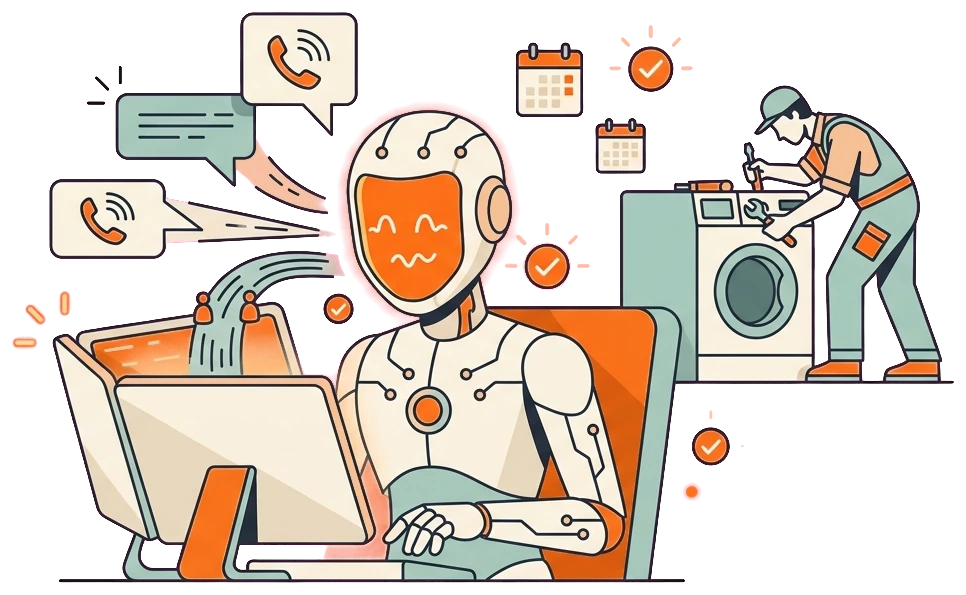
A busy appliance repair company had technicians and office staff buried under repetitive calls, and real bookings were slipping away during peak hours. We put an AI receptionist on the phones to answer instantly and prequalify every caller, so the team stopped losing jobs to hold music.
Results at a glance:
- Missed-call rate down around 90%
- Staff phone time down 60%
- Wasted dispatches reduced by filtering out-of-scope calls
- Live in 2 to 3 weeks
The Challenge
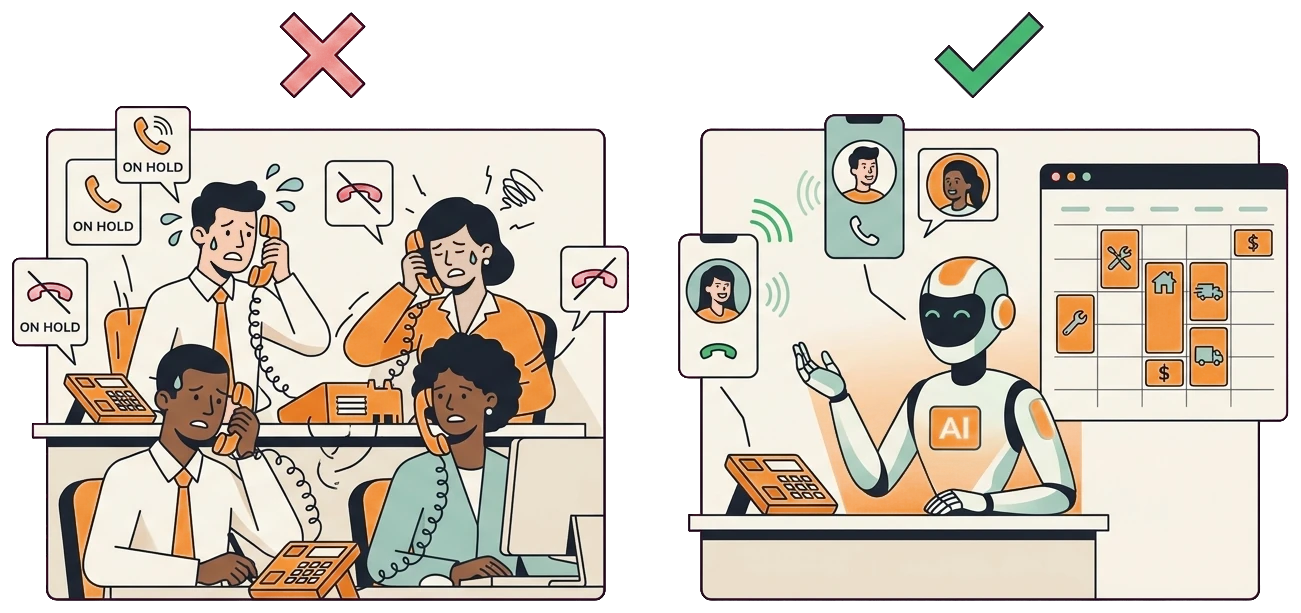
When things got busy, the phone simply overwhelmed the small team. Real bookings sat on hold, gave up, hung up, and dialed the next competitor instead. Meanwhile staff burned hours every day answering the same handful of questions, which pulled techs and office people away from the actual work.
The root of it was simple: human-only phone coverage could not scale with demand. A few things made it worse:
- During busy periods the phone volume outran the small team
- Bookings sat on hold, then hung up and went to competitors
- Staff wasted hours answering the same repetitive questions
- No prequalification, so techs got calls for out-of-area jobs
- Time was lost on unserviceable calls the company could not take
The Solution
We deployed an AI phone receptionist that answers instantly, prequalifies every caller, and books qualified jobs straight into the calendar, routing only the calls that truly need a human. Out-of-scope calls get filtered out politely, so the team’s time goes to real work. Here is what went into it.
- Concurrent first-response coverage during peak periods
- Qualified jobs booked straight into the calendar
- Only calls that need a human get escalated
- Trained on the company’s brands and service area
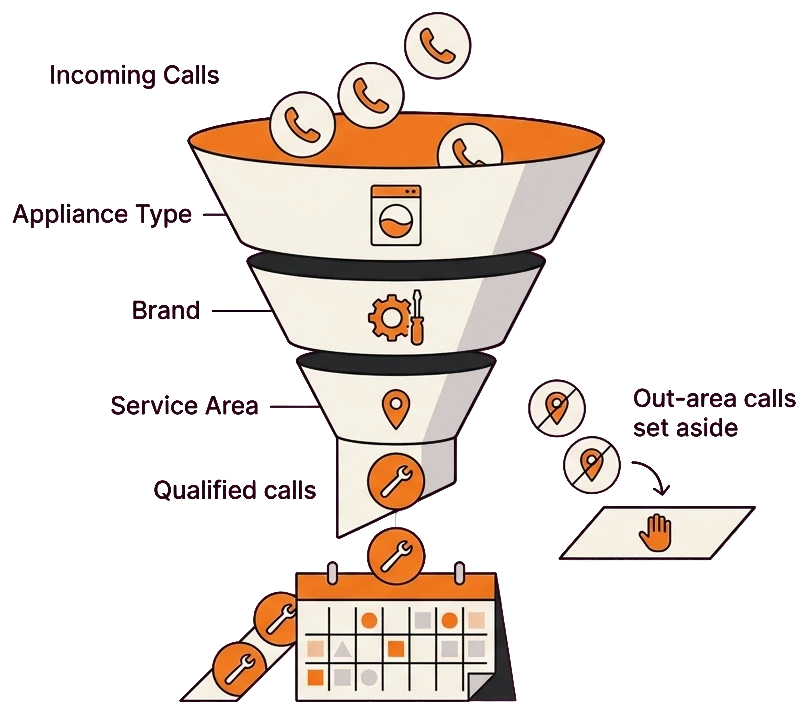
- Prequalification by appliance type, brand, and area
- Out-of-scope calls filtered out politely
- CallRail layered on for source tracking and recordings
- Booked jobs synced into the CRM and calendar automatically
Faster first response during peak call volume
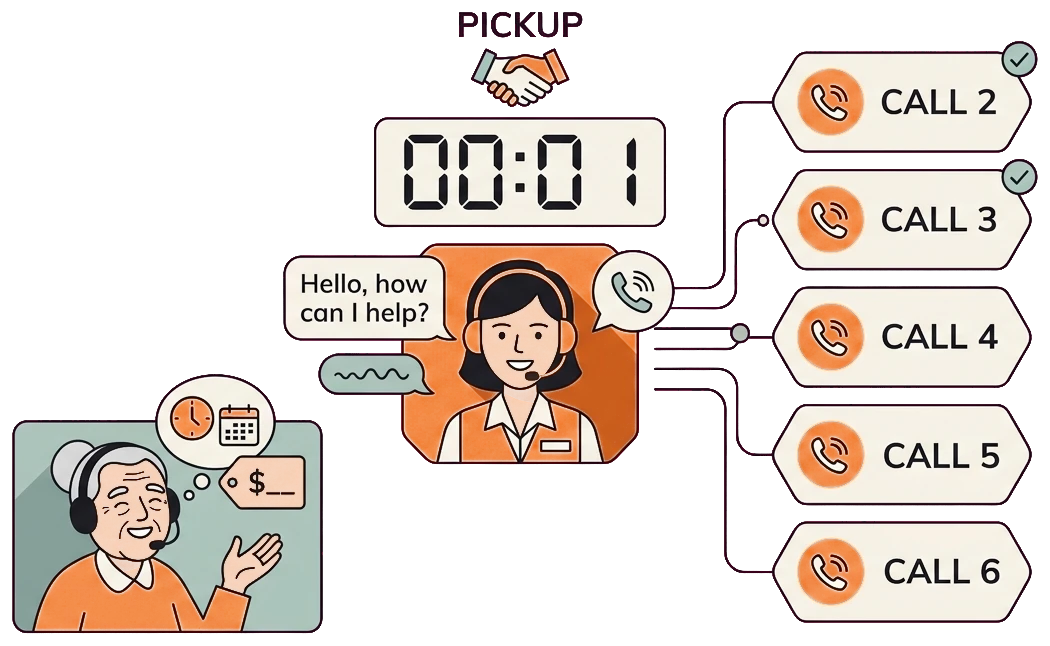
The main leak was abandonment during peak hold times. The receptionist handled concurrent first-contact conversations within the tested call capacity, reducing missed calls by about 90% during the measured period.
- No hold, no hang-ups: the AI picks up immediately on every line at once, which is what drove the missed-call rate down around 90 percent.
- Scales with demand: one busy afternoon or ten, the receptionist handles them all in parallel, so peak hours stop being a bottleneck.
- Consistent approved flow: callers receive the same opening questions and reviewed service information, with exceptions routed to staff.
- Staff freed to work: with the AI taking first contact, staff phone time dropped 60 percent and techs got their day back for actual repairs.
Prequalify before a truck ever rolls
Answering fast is only half the win. The AI also prequalifies each caller so the company only commits to jobs it can actually serve, which is where the real efficiency came from.
- By appliance type: the receptionist confirms the appliance up front, so the right tech and parts are lined up before the visit.
- By brand: callers are checked against the maintained service list, reducing out-of-scope bookings while uncertain cases remain eligible for human review.
- By service area: out-of-area callers are identified and politely filtered out, which cut the wasted truck rolls on jobs the company could not serve.
- Clean handoffs: only the calls that need a human get routed to one, so staff spend their time on the calls that matter.
How We Did It
01. Service rules
Mapped the prequalification logic around real service rules: appliance types, brands, and coverage area.
02. Calendar integration
Connected the AI receptionist to the calendar so qualified jobs book themselves into open slots.
03. Escalation paths
Defined which calls get routed to a human and set clean handoff rules for them.
04. Train on the business
Trained the receptionist on the company’s brands, service area, and common questions, with CallRail for recordings.
05. Monitor and tune
Reviewed real call recordings and tightened the flow so the AI kept getting sharper over time.
The Results
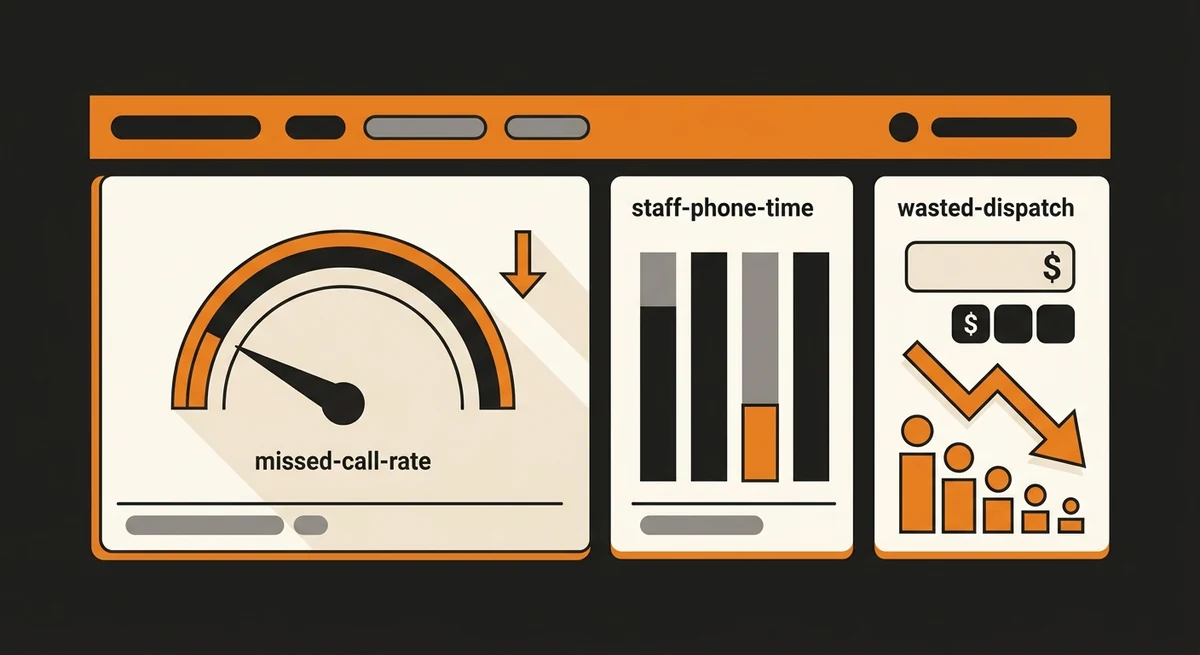
Hold-time abandonment fell sharply as the receptionist handled more first-contact calls. Staff phone time dropped 60%, and rule-based prequalification reduced out-of-scope dispatches during the reporting period.
| Missed-call rate | -~90% |
| Staff phone time | -60% |
| Wasted dispatches | Reduced by prequalification |
| Build time | 2 to 3 Weeks |
Services & tools used: AI phone receptionist, lead prequalification logic, CRM and calendar integration, and CallRail.
ai receptionistGood automation protects both the caller and the schedule
The main gain came from applying the company's real brand, geography, and job rules before dispatch, while keeping an accessible path to staff for exceptions.
- Review rejected calls so valid edge cases are not filtered out.
- Update service rules whenever brands, territories, or dispatch capacity change.
- Measure staff time saved alongside booking quality and customer outcomes.

Frequently Asked Questions
How we evaluated call coverage and prequalification
Phone and dispatch evidence reviewed
We compared missed and answered calls, call dispositions, prequalification outcomes, staff phone time, and out-of-scope dispatches. The service rules were based on appliance types, brands, geography, and job conditions the company supplied, so qualification matched its real operating model.
How to interpret the time and missed-call savings
The roughly 90% missed-call reduction and 60% staff-time reduction use this team's baseline and call mix. Savings change with call volume, question complexity, booking integrations, escalation frequency, and how often the business updates its service rules. Human review remains necessary for exceptions.
Editorial review: Gilmedia strategy team. First published July 20, 2026.
Related Gilmedia services
Losing calls when the phones get busy?
We will show you how an AI receptionist answers every call, prequalifies the caller, and books the jobs you actually want. No more hold, no more hang-ups.
Book a free consultationNo obligation. A 15-minute call and a clear action plan.
Services in this project: AI Phone Receptionist · Conversion Rate Optimization