

 (647) 478-5858
 (728) 500-4818
Dentist · Google Ads / PPC Performance
More New Patients, Lower Cost Per Chair
Fixing low Quality Scores for a growing dental practice
A growing dental practice wanted new-patient appointments but was paying more than competitors while showing up lower on Google. We rebuilt the account around individual treatments, and the cost per new patient dropped 38%.
Results at a glance:
- Cost per new patient down 38%
- Quality Score up across campaigns
- High-value inquiries up 65%
- Rebuilt in 3 to 5 weeks

The Challenge
The practice was paying more than its competitors and still showing up lower in the results. New-patient cost had climbed to a point that was hard to justify, and the calendar still had gaps. The assumption was that they simply needed a bigger budget, when the real issue was how the account was built.
We audited the account, and a handful of problems were quietly driving costs up:
- One catch-all campaign lumped every treatment together
- Ad copy was generic and did not match what people searched
- Every ad pointed at the homepage instead of a relevant page
- There was no tracking of which treatments actually drove calls
- Low relevance meant low Quality Scores, which meant high costs and low rankings
The Solution
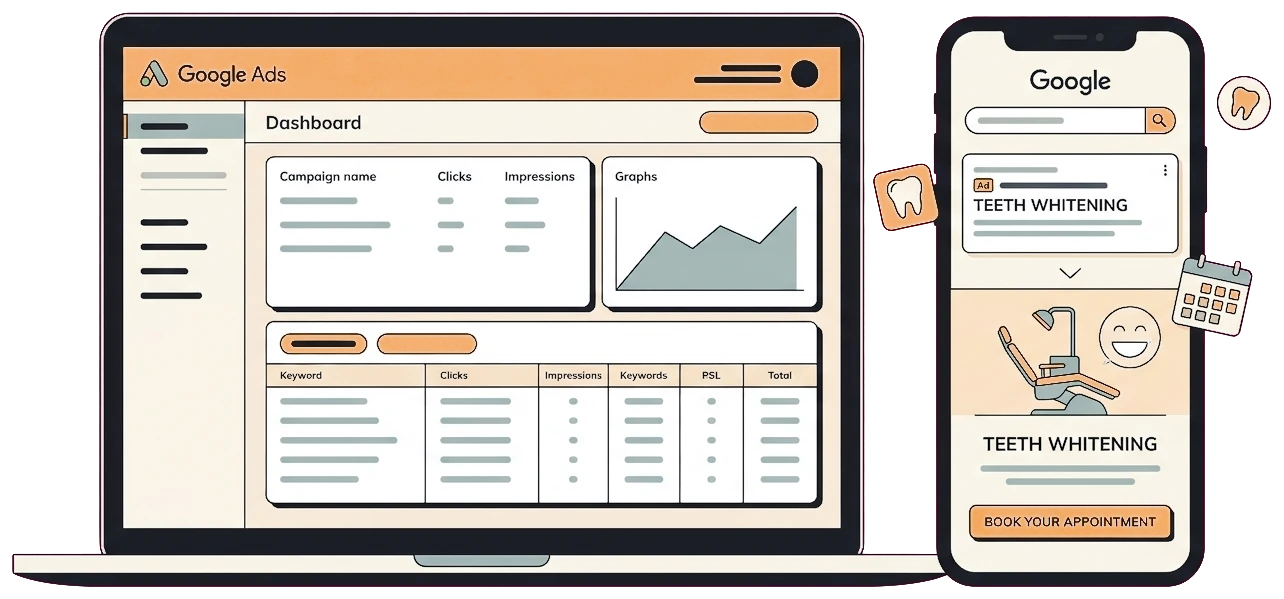
We split the account by treatment so each service could speak to its own searcher, and we tracked calls by treatment so budget flowed to the most profitable work. See the Google Ads work below.
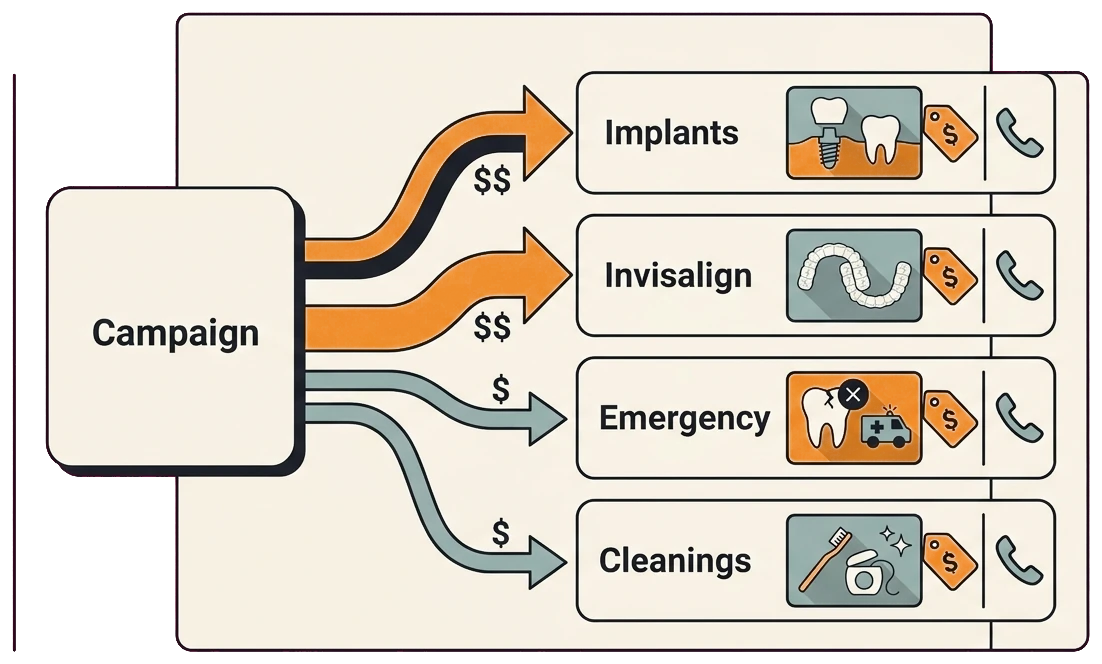
- Separate campaigns for implants, Invisalign, emergency, and cleanings
- Service-specific ads and landing pages
- Call tracking by treatment
- New-patient offers to lift response
- Tighter, more relevant keyword themes per treatment
- Higher Quality Scores that pulled click costs down
- Budget shifted toward high-value implant and Invisalign leads
- Clear reporting tied to booked appointments

Match the ad, the search, and the page
The old account sent everyone to the homepage with one generic ad. We lined up each keyword with an ad that speaks to it and a landing page built for that exact treatment, which is what Google rewards with a higher Quality Score.
- One intent per campaign: someone searching dental implants and someone searching Invisalign want very different things, so we stopped forcing them through the same ad and page.
- Ads that match the search: treatment-specific copy answers the actual query, which lifts click-through and tells Google the ad is relevant.
- Landing pages that match the ad: each ad points at a page about that treatment, not the homepage, so visitors find what they clicked for and book instead of bouncing.
- Higher Quality Score, lower cost: better relevance raised Quality Scores across campaigns, and that alone pulled click costs down while lifting position.
Track calls by treatment so budget follows profit
Before, nobody could say which treatments the ads were actually bringing in. We tracked calls by treatment so the practice could pour budget into the most profitable work through a clean measurement setup.
- Calls tagged by treatment: CallRail ties each call to the campaign and treatment that drove it, so an implant call and a cleaning call are no longer counted the same.
- See what pays: with calls tied to treatment, it was obvious that implants and Invisalign were worth far more than a cleaning, so budget moved accordingly.
- Budget follows value: spend shifted toward high-value treatments, which is why high-value inquiries rose 65% rather than just total call volume.
- Fewer wasted dollars: money stopped going to low-relevance clicks and low-value treatments, which helped drop cost per new patient 38%.
- Reporting leadership trusts: GA4 and call tracking connect spend to booked appointments, so decisions are based on real numbers, not guesses.
How We Did It
01. Account audit
A full Google Ads audit to find where relevance, structure, and tracking were driving costs up.
02. Campaign segmentation
Split the catch-all campaign into treatment campaigns for implants, Invisalign, emergency, and cleanings.
03. Ad and landing alignment
Wrote service-specific ads and matched each to a dedicated treatment landing page to lift Quality Scores.
04. Call tracking by service
Wired in CallRail and GA4 so every call was tagged to the treatment and campaign that produced it.
05. Reallocate budget
Shifted spend toward the highest-value treatments and kept optimizing on real booked appointments.

The Results
Cost per new patient dropped as Quality Scores rose and the wasted spend from irrelevant clicks disappeared. Just as important, high-value treatment inquiries climbed because the practice could finally see which treatments its ads produced and shift budget toward implant and Invisalign leads, filling the gaps in the calendar.
| Cost per new patient | -38% |
| Quality Score | Up across campaigns |
| High-value inquiries | +65% |
| Build time | 3 to 5 Weeks |
Services & tools used: Google Ads, CallRail, GA4, and treatment-specific landing pages.
google ads“We finally know which treatments our ads bring in, and the costs make sense now.“
Practice Owner, Dental clinic

Frequently Asked Questions
Paying too much for new patients?
We will show you exactly where your Google Ads budget is leaking and how to lower your cost per new patient. Fill the calendar with the treatments that pay.
Get your free auditNo obligation. A 15-minute call and a clear action plan.
Services in this project: Google Ads Management · Conversion Rate Optimization