

 (647) 478-5858
 (728) 500-4818
Florist · WhatsApp Chatbot + Automation
Turn Faster WhatsApp Replies Into More Orders
Turning WhatsApp messages into flower orders
A florist was getting a flood of WhatsApp inquiries about arrangements, delivery, and pricing, faster than staff could reply during busy seasons. We built a chatbot that answered every message in seconds, and inquiry-to-order climbed 55%.
Results at a glance:
- Inquiry-to-order rate up 55%
- WhatsApp response time cut from minutes to seconds
- Peak-season orders captured with no extra staff
- Live in 2 to 3 weeks

The Challenge
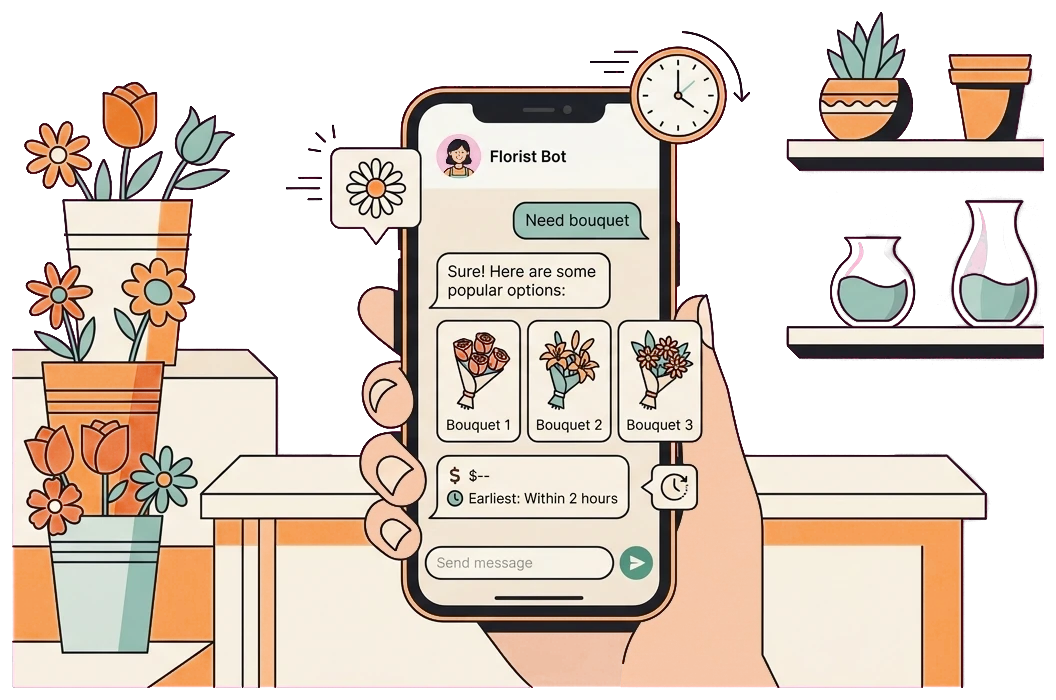
Around holidays the messages piled up faster than anyone could answer them. Slow replies meant orders walked straight to competitors who answered first. The team could not arrange flowers and juggle a WhatsApp thread at the same time, so the phone won and the chats waited.
We looked at how inquiries were being handled during a peak week, and the same problems kept costing orders:
- Manual WhatsApp handling could not scale past a handful of chats at once
- Customers expected instant replies and abandoned slow conversations
- Holiday volume overwhelmed the same small team that was arranging flowers
- Common questions about pricing and delivery windows got answered late or not at all
- Warm buyers slipped away in the gap between message and reply
The Solution
We built a WhatsApp chatbot that answered instantly with arrangement options, pricing, and delivery windows, then captured the order details and handed warm orders to staff to finalize. It ran day and night through the busiest periods so nothing sat unanswered.
- Instant replies to every WhatsApp message, day or night
- Arrangement options and pricing served on request
- Speed-to-reply that beats the competition
- Clear delivery windows so customers know what to expect
- Structured order capture with staff handoff
- A knowledge base of catalog and FAQ answers
- Handoff rules so warm orders reach a human to finalize
- Holiday load testing so it holds up when volume spikes

A faster reply preserves more buying intent
During holiday peaks, reply delay was one visible source of inquiry drop-off. The new flow responded quickly, showed current catalogue and delivery information, and passed custom requests to staff instead of treating speed as a completed sale.
- Fast first response: the flow acknowledges a message and presents available order paths quickly, reducing one reason a buyer may leave the conversation.
- Around the clock: inquiries at 11pm or 6am get the same instant answer, capturing demand that used to fall outside working hours.
- Concurrent conversations: the tested flow handled multiple routine chats while staff remained responsible for inventory, exceptions, and final fulfilment.
- Measured outcome: inquiry-to-order conversion rose 55% during the observed period, with catalogue, holiday demand, pricing, and fulfilment also affecting the result.
Capture the details, hand off a warm order
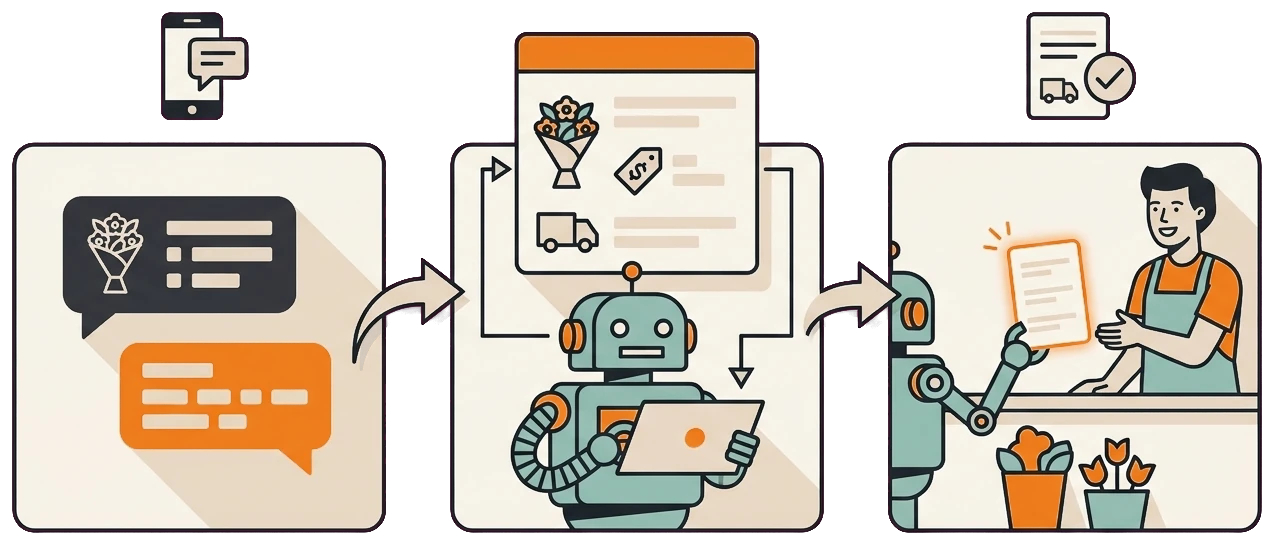
Answering fast is only half the job. The bot also collected everything the florist needs to fill the order, then passed a ready-to-finalize conversation to a person, so the AI chat did the busywork and staff did the flowers.
- Order details captured: arrangement, budget, delivery date and address are gathered in the chat, so nothing has to be re-asked later.
- Warm handoff: when an order is ready to finalize, it goes to a staff member with the full context, not a cold restart.
- Flows into the CRM: captured orders land in the CRM automatically, so records stay tidy even during a holiday spike.
- Staff on the exceptions: the team only steps in for the special requests and the final confirmation, freeing them to actually arrange flowers.
How We Did It
01. Catalog and FAQ setup
We loaded the arrangement catalog, pricing, and common questions into the WhatsApp Business API knowledge base.
02. Conversation flows
We designed the chat flows that guide a customer from question to a captured order.
03. Order capture
We built the automation that collects arrangement, delivery, and contact details into a clean order record.
04. Handoff rules
We set the rules that pass warm, ready-to-finalize orders to staff with full context.
05. Holiday load testing
We stress-tested the bot against peak volume so it held up through Valentine’s and Mother’s Day.
The Results
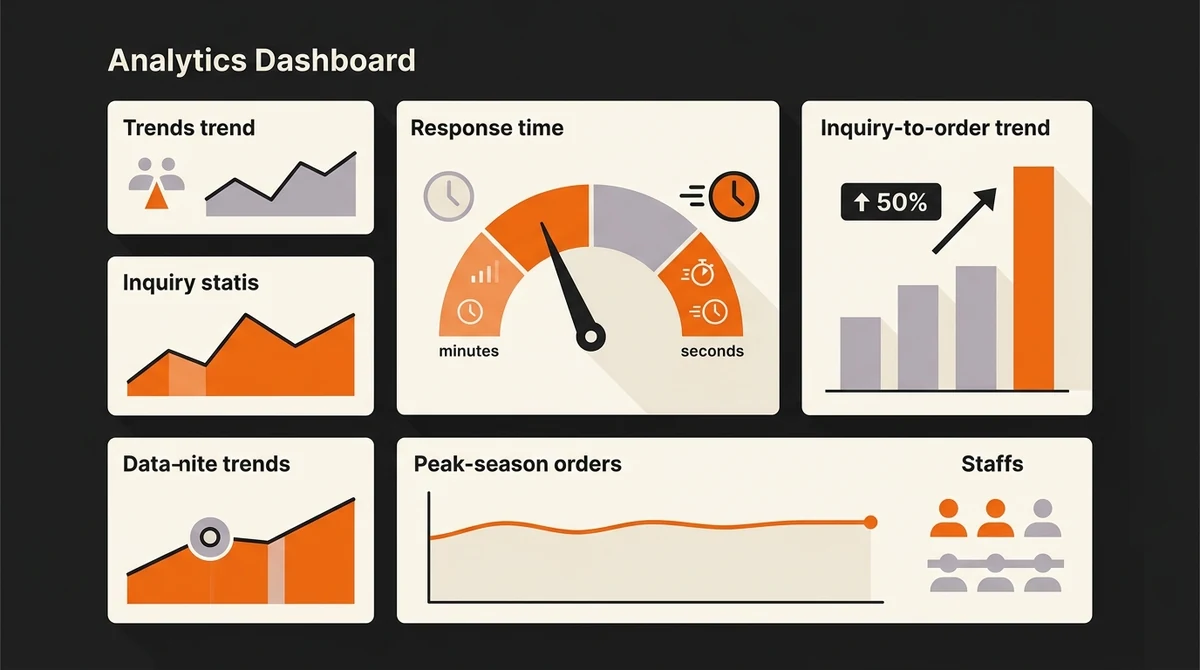
Response time fell from minutes to seconds and inquiry-to-order conversion improved, with the strongest observed lift during high-volume holidays. The result also depended on product availability, delivery capacity, pricing, and staff handoff.
| WhatsApp response time | minutes to seconds |
| Inquiry-to-order rate | +55% |
| Peak-season orders | captured without extra staff |
| Build time | 2 to 3 Weeks |
Services & tools used: WhatsApp Business API, chatbot build, order capture automation, and CRM integration.
whatsapp chatbotFast replies helped because the order data stayed current
Response speed reduced one source of drop-off, but the flow still depended on accurate inventory, delivery coverage, pricing, and a clean staff handoff for custom requests.
- Pause or update automated offers when products sell out.
- Route custom arrangements and delivery exceptions to a person.
- Measure completed orders, not message starts, as the commercial outcome.

Frequently Asked Questions
How we evaluated response speed and order conversion
Message-to-order evidence used
We reviewed WhatsApp message timestamps, the questions and product details captured in each flow, handoffs to staff, and whether an inquiry became an order. Peak-season activity was important because slow replies had previously caused buyers to move to another florist.
What influenced the 55% conversion lift
The increase in inquiry-to-order rate belongs to this florist's catalogue, delivery area, pricing, inventory, holiday demand, and handoff process. Faster replies reduce one source of lost orders, but product availability and staff fulfilment still determine whether an order can be completed.
Editorial review: Gilmedia strategy team. First published July 22, 2026.
Primary references
Related Gilmedia services
Losing orders to slow replies?
We will show you how an instant-reply WhatsApp chatbot can capture more orders during your busiest weeks. Answer every customer in seconds, even when your team is buried.
Book a free consultationNo obligation. A 15-minute call and a clear action plan.
Services in this project: WhatsApp Chatbot · AI Chat