

 (647) 478-5858
 (728) 500-4818
HVAC · Call Tracking + AI Phone Receptionist
Recover More After-Hours HVAC Calls
Capturing the after-hours calls that were walking away
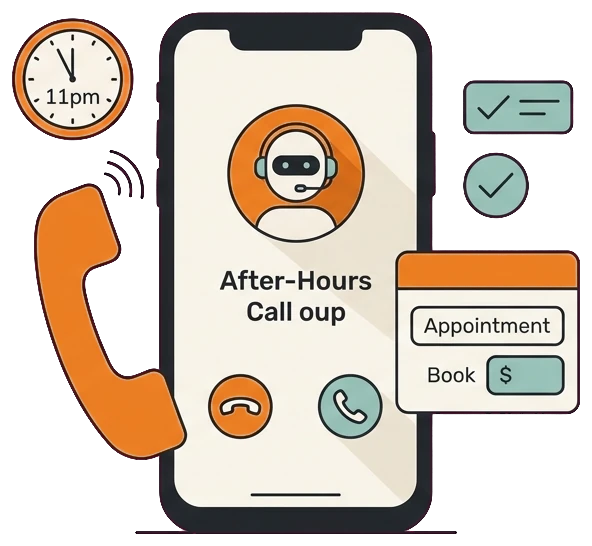
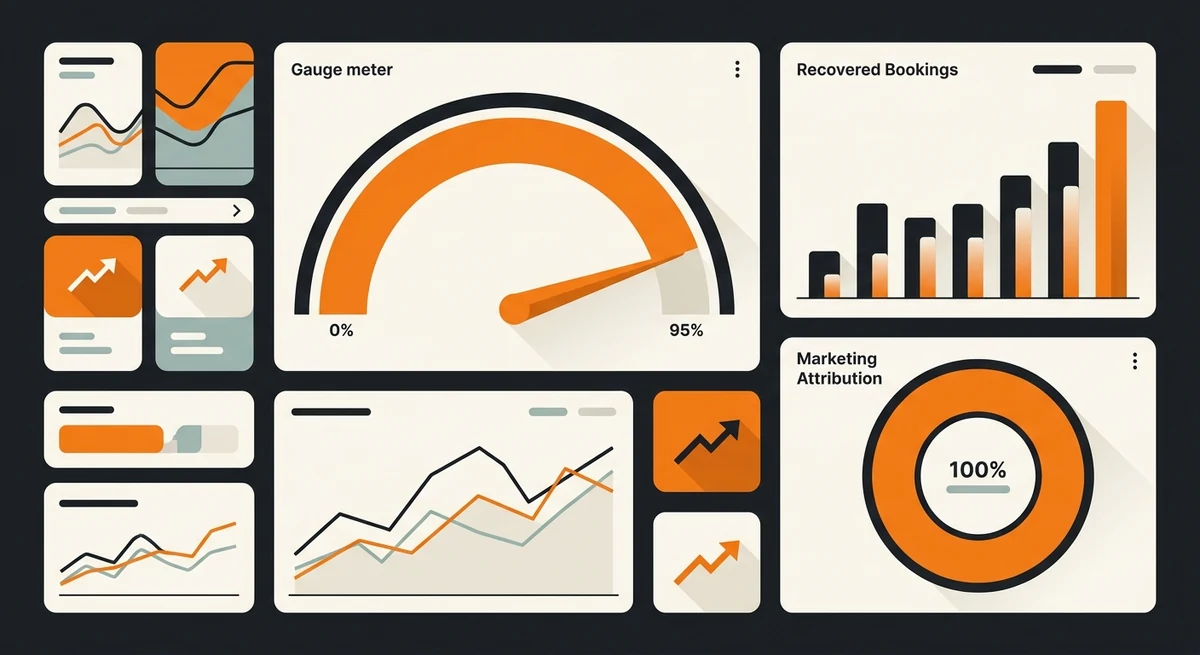
A residential HVAC company was losing emergency and evening calls to voicemail, and those customers never left a message, they just called the next competitor. We put an AI receptionist on the phones around the clock, and the after-hours answer rate went from 0% to about 95%.
Results at a glance:
- After-hours answer rate up from 0% to ~95%
- Recovered bookings worth thousands per month
- Source-level tracking added for covered calls
- Deployed in 2 to 3 weeks
The Challenge
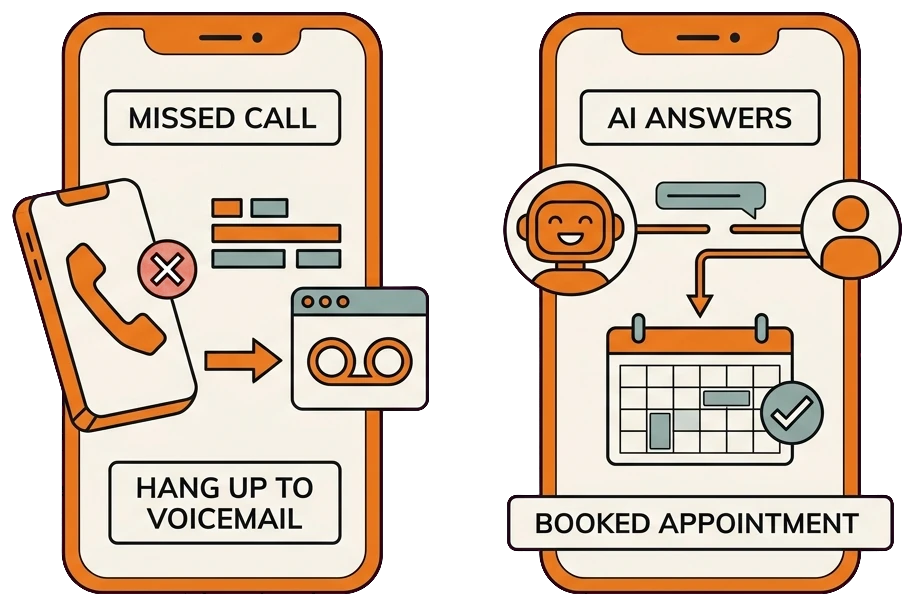
A huge share of HVAC demand happens after hours and on weekends, exactly when the office is closed. The client had no way to answer those calls, no idea how many they were missing, and no attribution on which marketing actually made the phone ring. The losses were real, but they were completely invisible.
We looked at how calls were handled outside business hours, and the pattern was costing the business every night:
- Calls outside business hours went straight to voicemail
- Customers with an emergency rarely left a message, they just called the next company
- There was no call tracking, so leadership could not see the scale of the loss
- No one could tell which campaigns actually produced calls
- Missed calls meant missed revenue, night after night, invisibly
The Solution
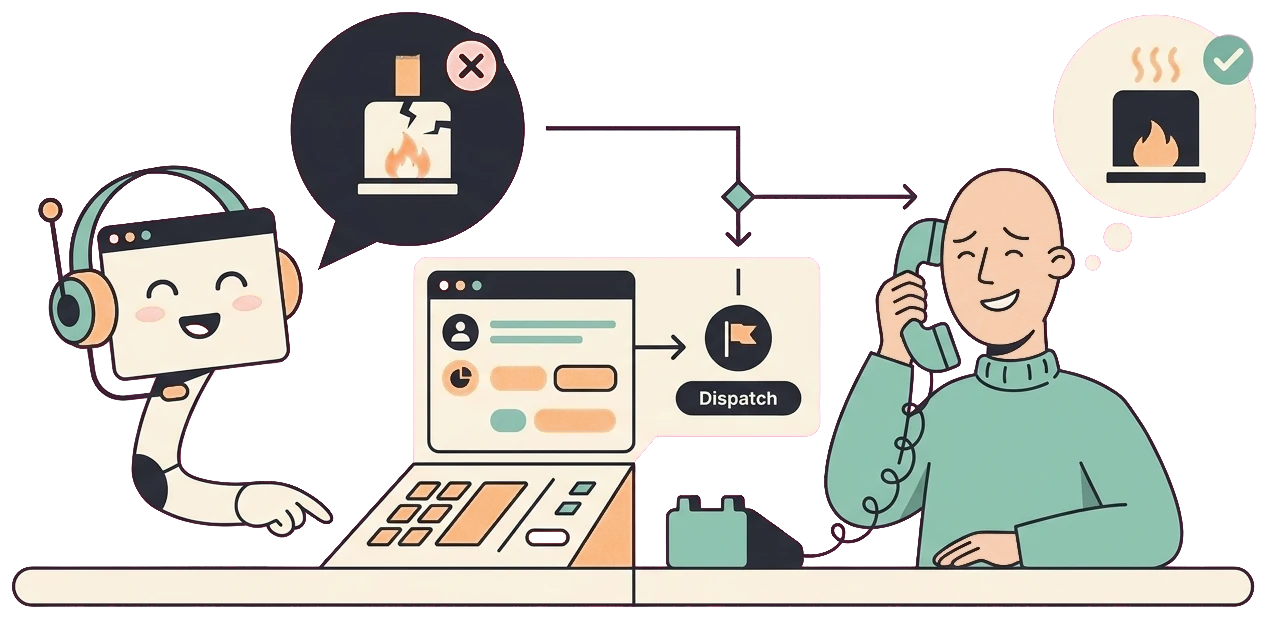
We put an AI phone receptionist on the after-hours line to handle approved questions, collect job details, book eligible appointments, and escalate calls that met the company’s emergency rules. CallRail added source data to covered calls so marketing could be compared with booking outcomes.
- An AI receptionist providing extended after-hours coverage
- Appointments booked straight into the calendar
- Emergency calls qualified and flagged for immediate dispatch
- Call tracking that adds source data to covered calls
- A call flow designed around the services and common questions
- CRM booking sync so nothing was retyped or lost
- Call recording for quality and coaching
- A weekly call-quality review to keep improving the flow
After-hours coverage with defined limits
The whole problem was that after-hours calls hit voicemail and vanished. So we trained an AI receptionist on the company’s services and FAQs to answer instantly, any hour, and actually book the job instead of taking a message.
- Extended coverage: the receptionist was configured for evenings and weekends, with measured answer rate improving from 0% to about 95% during the reporting period.
- Qualifies the issue: the receptionist asks the right questions to understand the problem before anything is booked or dispatched.
- Books the appointment: qualified jobs go straight onto the calendar through the CRM sync, so the booking is done, not just promised.
- Flags real emergencies: a no-heat call in winter is escalated for immediate dispatch, so genuine emergencies reach a human fast.
Finally seeing which marketing makes the phone ring
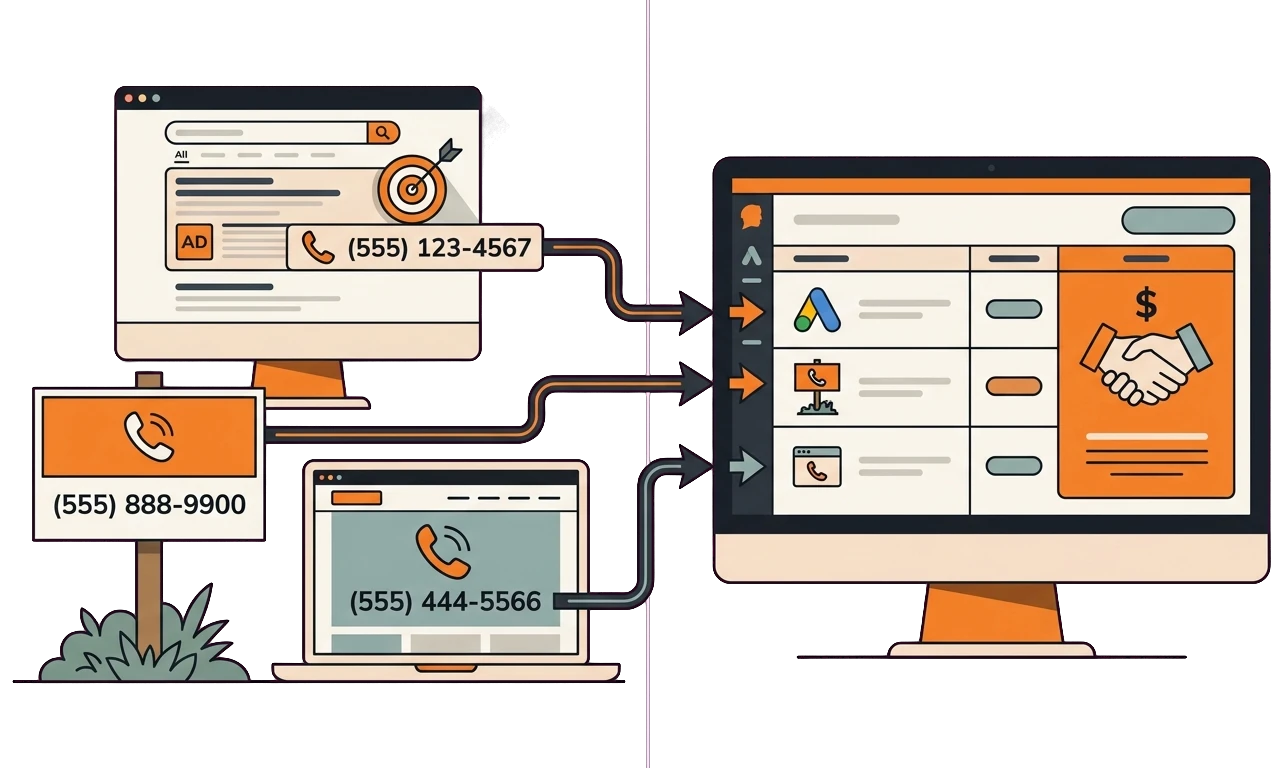
Answering the calls was half the fix. The other half was knowing where they came from. We layered CallRail with dynamic number insertion over the whole setup so the client could measure which channels actually drove booked jobs.
- Source tracking: dynamic number insertion tags every website call, and unique numbers track offline channels, so each call carries its source.
- Stronger attribution: dynamic number insertion and campaign numbers added source data to covered calls, while repeat, saved-number, and offline behaviour remained possible limitations.
- Call recording: recordings feed the weekly quality review, so the AI flow keeps getting sharper over time.
- Spend that follows results: with real attribution in hand, the client could shift budget toward the channels that actually drove booked jobs.
How We Did It
01. Call flow design
Mapped how every call should be handled, from routine bookings to after-hours emergencies.
02. Train the receptionist
Trained the AI receptionist on the company’s services and FAQs so it answers accurately.
03. Emergency escalation
Set escalation rules so true emergencies get flagged for immediate human dispatch.
04. Call tracking setup
Deployed CallRail with dynamic number insertion and dedicated campaign numbers to improve source coverage across tracked calls.
05. Sync and review
Wired CRM booking sync and set up a weekly call-quality review to keep improving.
The Results
More after-hours calls received a useful response and some became booked jobs. Source and booking data gave the client a stronger basis for reallocating spend, while the 95% answer rate and recovered bookings remained specific to the measured setup and period.
| After-hours answer rate | 0% to ~95% |
| Recovered bookings | Thousands per month |
| Marketing attribution | 100% of calls |
| Build time | 2 to 3 Weeks |
Services & tools used: AI phone receptionist, CallRail, dynamic number insertion, CRM integration, and GA4.
ai receptionistCoverage is valuable only when the handoff is dependable
The receptionist recovered more after-hours opportunities because its role, escalation limits, and booking access were defined before calls were routed to it.
- Track useful resolutions and booked work, not answer rate alone.
- Keep emergency escalation and outage failover under human ownership.
- Review recordings and call outcomes to catch knowledge or routing gaps.

Frequently Asked Questions
How we measured after-hours call recovery
Call records used in the review
The comparison uses after-hours call logs, answered-versus-voicemail outcomes, call-source attribution, and recovered booking records. The main benchmark was the share of evening and emergency calls that received a useful response instead of reaching an unattended voicemail box.
Operational limits behind the 95% answer rate
The reported rate is approximate and depends on the configured call flows, integrations, escalation rules, phone availability, and the types of requests the receptionist is allowed to handle. A call being answered does not guarantee that it becomes a booking or a completed HVAC job.
Editorial review: Gilmedia strategy team. First published July 14, 2026.
Related Gilmedia services
How many calls are you missing?
We will show you how many calls slip to voicemail after hours and how to capture every one. Turn missed calls into booked jobs.
Get your free auditNo obligation. A 15-minute call and a clear action plan.
Services in this project: AI Phone Receptionist · Conversion Rate Optimization