

 (647) 478-5858
 (728) 500-4818
HVAC Website Redesign Case Study
Same Traffic, 3x the Booked Jobs
Conversion Optimization + Website Redesign
A family-run residential HVAC company in the GTA had steady ad spend and decent traffic, but almost no booked jobs coming from the website. We rebuilt the site around one clear action and tripled bookings from the same visitors.
Results at a glance:
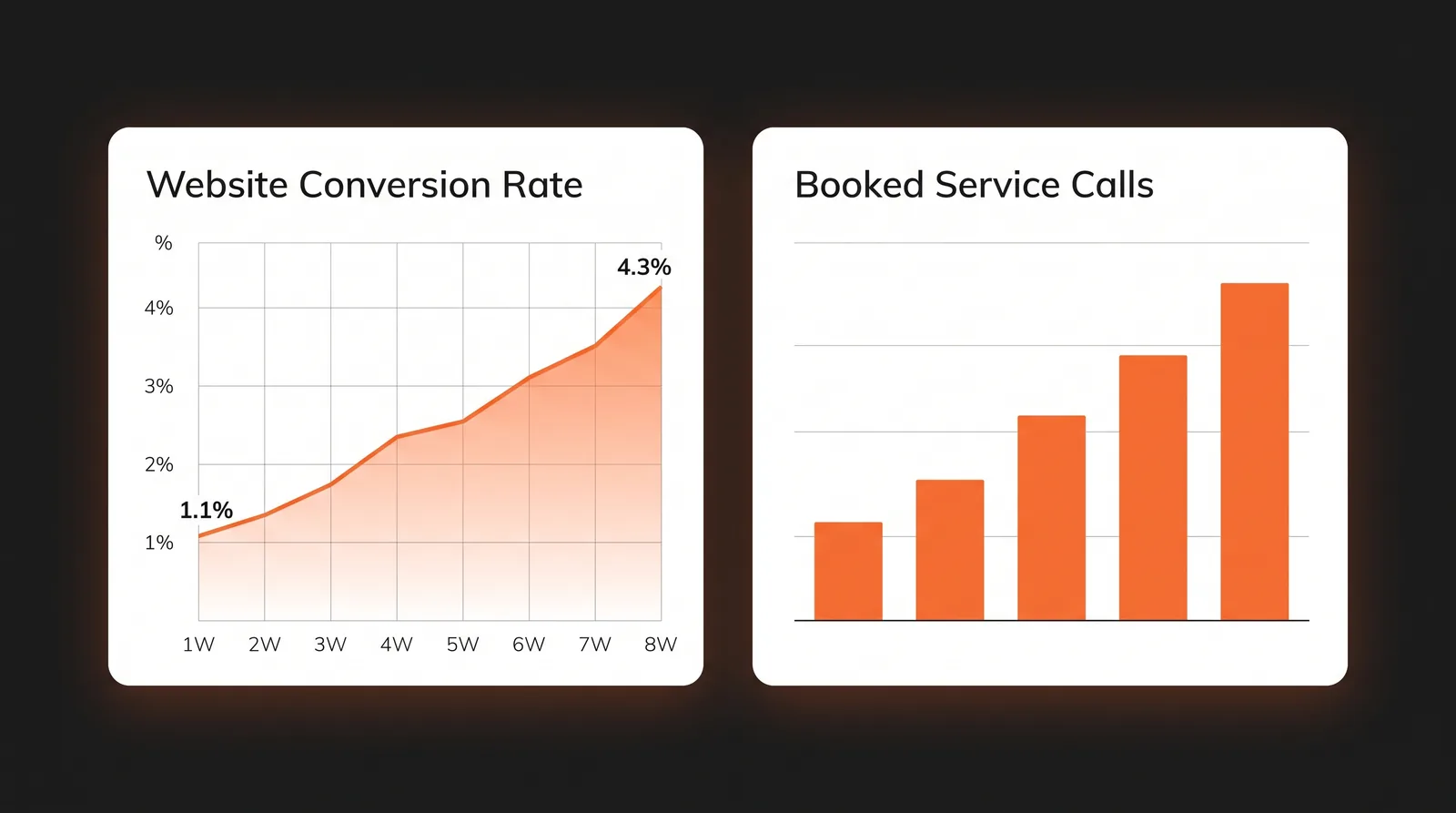
- Conversion rate up from 1.1% to 4.3%
- Booked service calls up around 190%
- Mobile load time cut from 6.2s to 1.9s
- Cost per booked job down 52%
The Challenge
The client was spending on Google Ads and getting clicks, but the phone was not ringing and the contact form barely moved. Visitors landed, looked around, and left. Leadership assumed the problem was ad targeting. The real leak was the website itself.
We ran a conversion audit and reviewed the online brand end to end. A handful of problems were quietly costing the business jobs:
- The homepage buried the phone number
- There was no clear primary action for visitors to take
- Trust signals like reviews and badges were missing
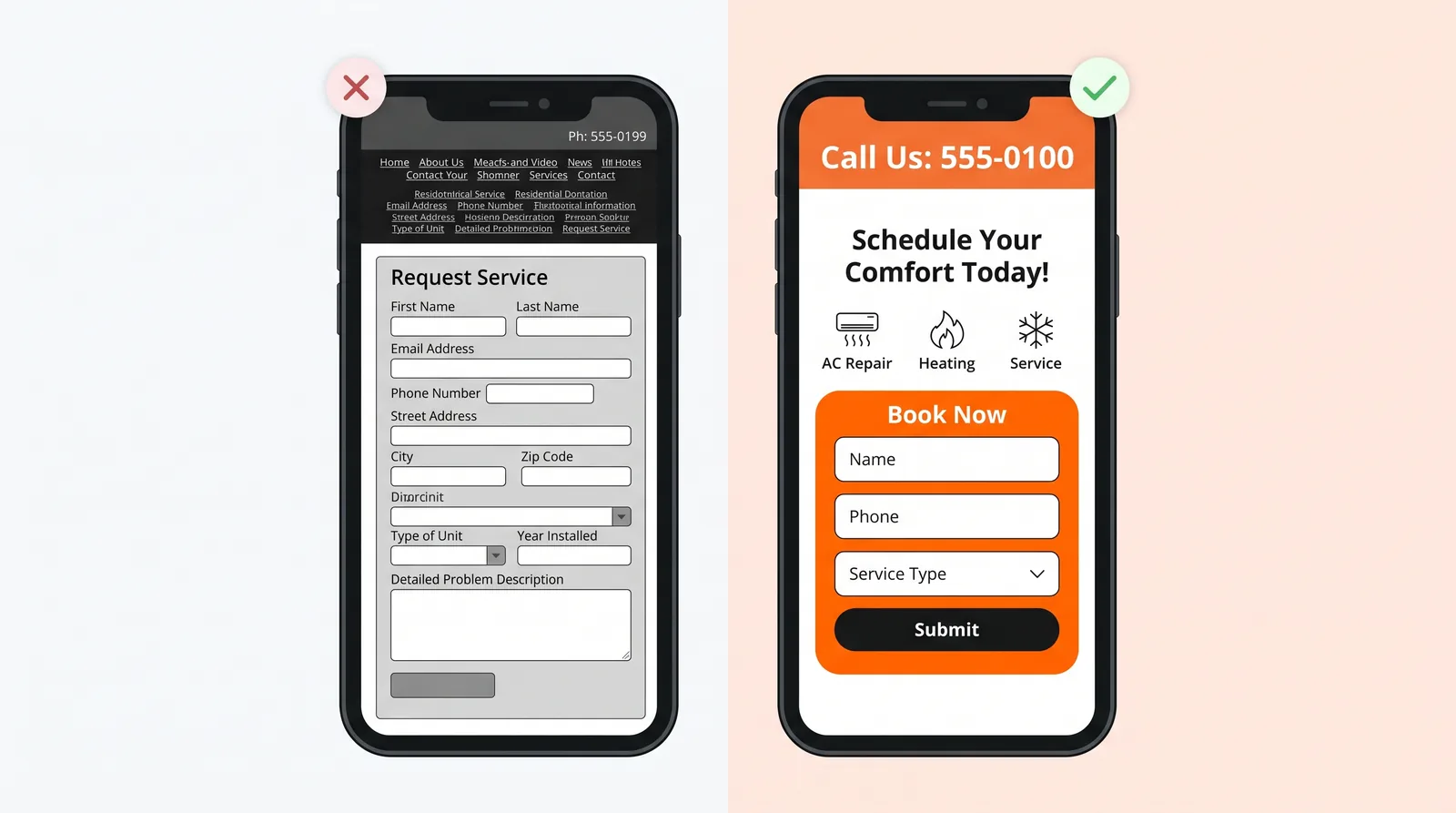
- The booking form asked for nine fields
- On mobile, the call button sat below three scrolls
- Mobile pages took more than six seconds to load
The Solution
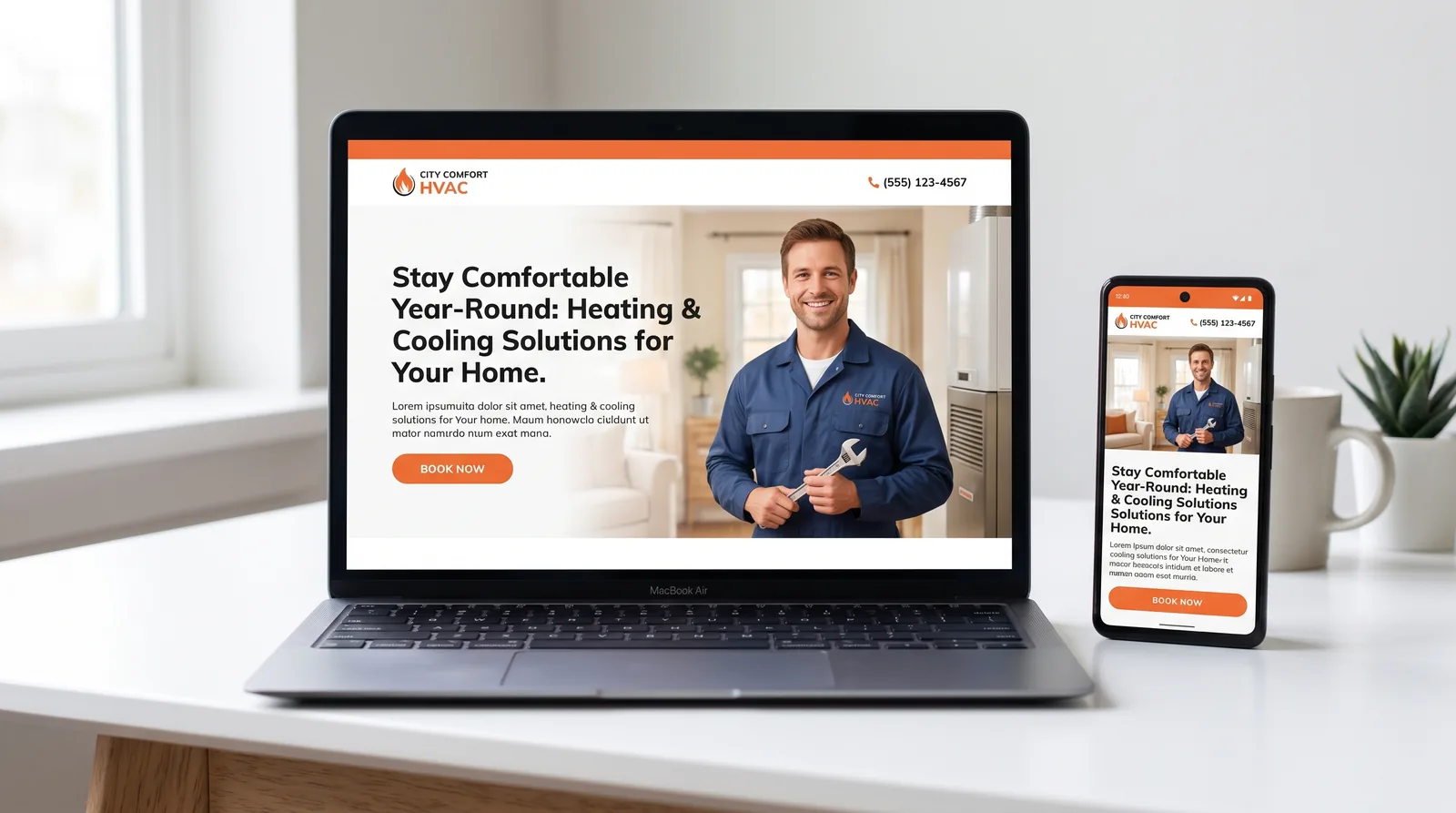
We mapped the brand and built a conversion plan first, then designed and built a new conversion-optimized website around a single clear action: book a service call. Here is what went into it.
- Sticky click-to-call button on mobile
- A three-field quick-quote form
- Service-specific landing pages
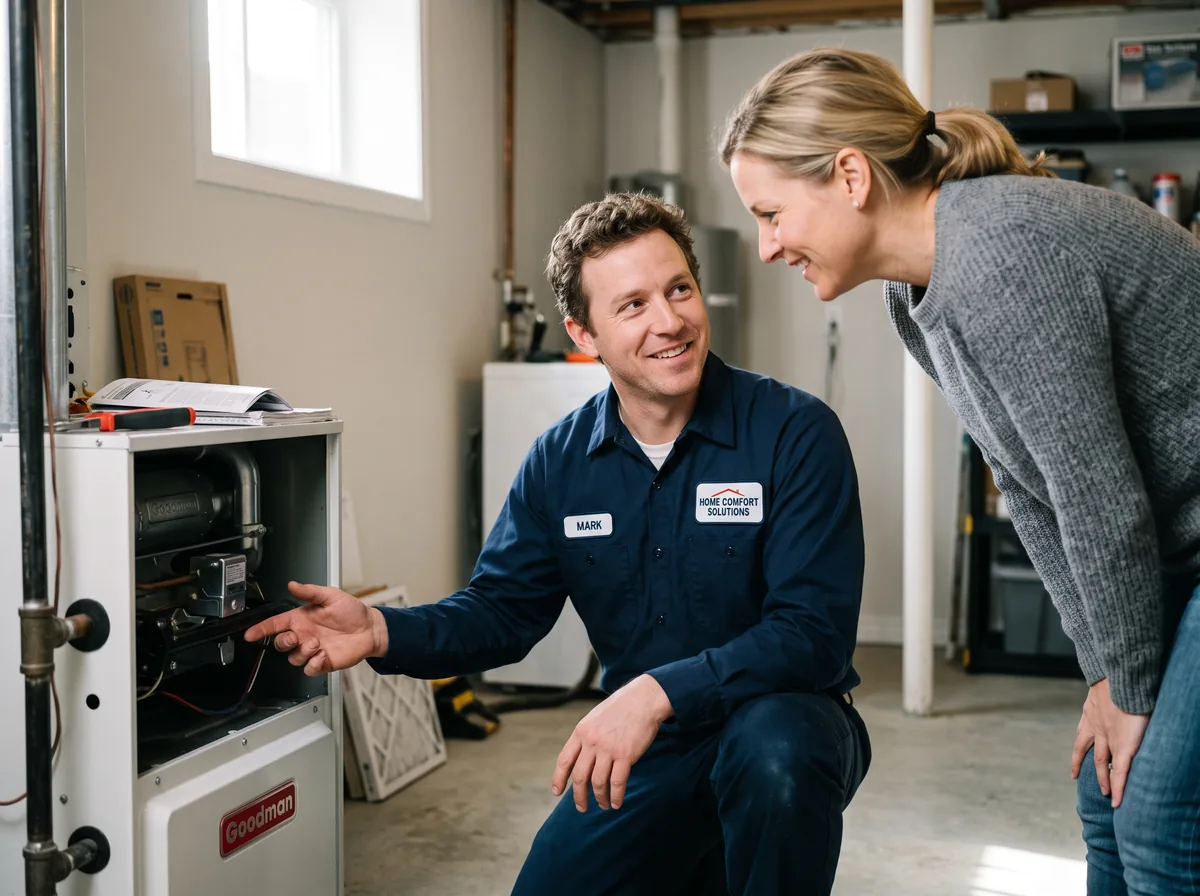
- Real photos instead of stock imagery
- Reviews placed next to every call to action
- Financing badges to build trust
- Lighter pages so mobile loads in under two seconds
- Clear service navigation and strong headlines
Real photos, not stock
We threw out the stock images and shot the real thing: the actual team, the trucks, and the work inside real homes. It sounds like a small detail, but it pulls a lot of weight.
- Trust and confidence: people can spot a stock model in a second, and it makes them hesitate. Real faces from the actual company put visitors at ease and make them far more likely to book.
- Brand: the site finally looks like the company customers meet at the door, not a template. That consistency is what makes a brand feel real and credible.
- SEO: original images are unique to your site, so they can rank in Google Image search and add relevance that stock photos, reused on a thousand other sites, never will.
- AI and GEO: answer engines increasingly favour first-hand, original content when they decide who to trust and cite. Authentic media is a strong E-E-A-T signal that helps you show up in AI answers.
Service pages built to help each other, not compete
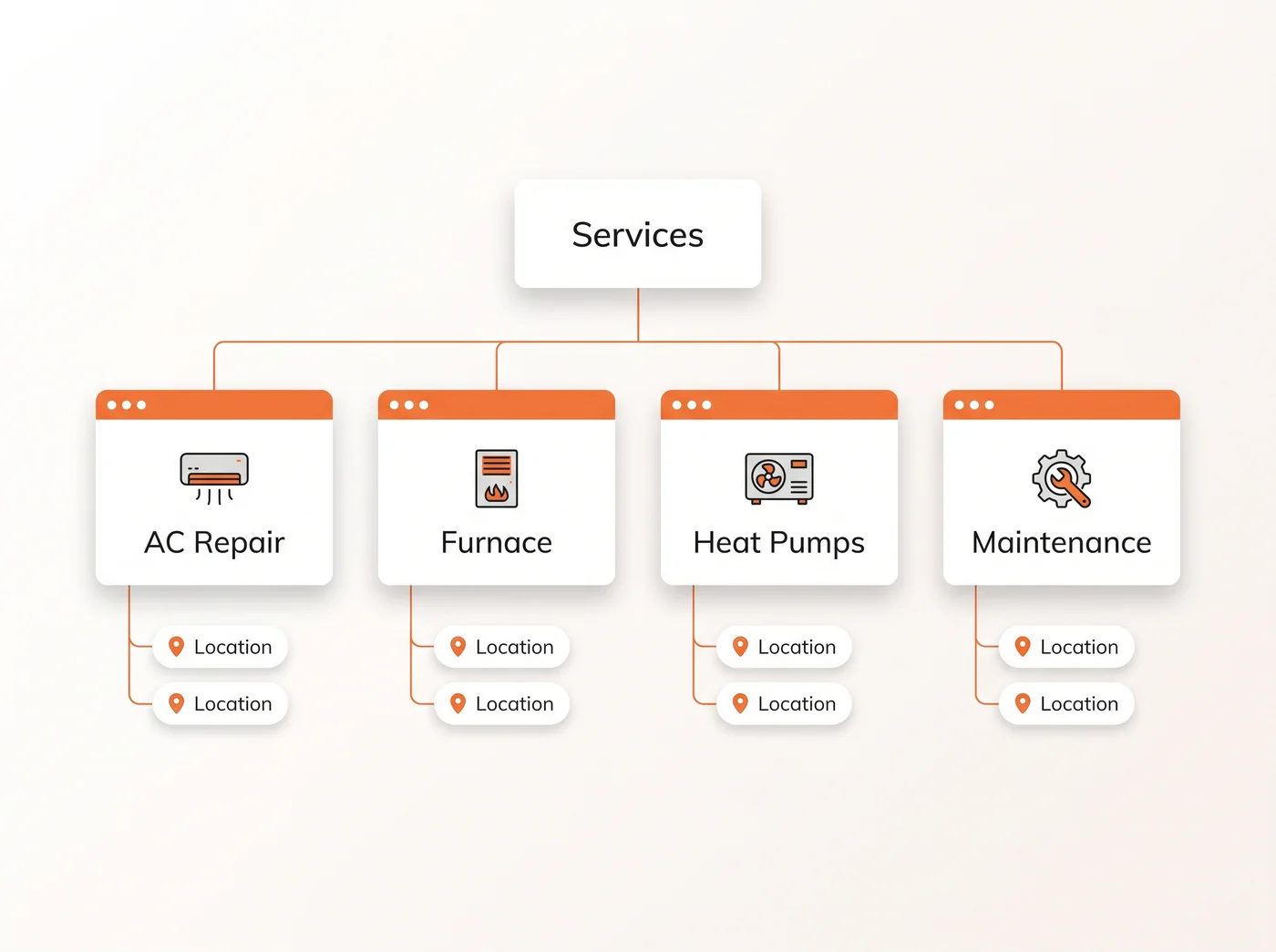
Instead of one catch-all Services page, we mapped every service the company offers and gave each one its own dedicated SEO-ready page. Then we made sure no two pages chased the same search, so they stopped cannibalizing each other in Google.
- A clear hierarchy: from the main Services hub down to each specific service, so visitors and search engines both understand the structure.
- Mapped to avoid cannibalization: each page targets one search intent, so your own pages stop competing for the same keyword.
- Split and rewritten: where old pages overlapped, we pulled them apart and rewrote them from scratch.
- Unique on every page: its own photos, its own reviews, and its own FAQs, not the same block copied everywhere.
- Location-relevant: content and images tailored to each service area, so the page is genuinely useful to someone searching in that city.
How We Did It
01. Audit and brand review
A full conversion audit and brand review to find every point of friction, backed by GA4, Microsoft Clarity heatmaps and CallRail.
02. Map the journey
Customer journey mapping and wireframes built around one clear action: book a service call.
03. Copy and design
Conversion copywriting and a custom design that puts booking front and center on every page.
04. Build and track
A fast WordPress build with analytics and call tracking wired in from day one.
05. Test and launch
A/B tests on the hero and form length, then launch and measure the results.
The Results
Conversion rate from the same traffic climbed from about 1.1% to 4.3% within eight weeks. Booked service calls from the same ad budget nearly tripled, and the cost per booked job dropped by more than half.
| Website conversion rate | 1.1% to 4.3% |
| Booked service calls | +190% |
| Mobile load time | 6.2s to 1.9s |
| Cost per booked job | -52% |
| Build time | 6 to 8 Weeks |
“We thought we needed more ads. Turns out we needed a website that actually asked people to book. The phone has not stopped.“
Owner, Residential HVAC company, Greater Toronto Area
Frequently Asked Questions
Usually the problem is not traffic, it is the site. If the phone number is buried, there is no obvious next step, the form is long, or the mobile page is slow, visitors leave before they book. In this project, fixing those issues took conversions from 1.1% to 4.3% without spending a dollar more on ads.
Lead with one clear action, put click-to-call within thumb reach on mobile, cut forms down to the few fields you actually need, add reviews and trust badges next to every call to action, and get mobile load under two seconds. Small bits of friction add up, so we remove them one by one.
For a residential HVAC site like this one, the build ran 6 to 8 weeks from audit to launch, and the results showed up within the first month after going live.
Many local HVAC sites convert around 1 to 2% of visitors. A well-optimized site can reach 4 to 5% or higher. This project moved from 1.1% to 4.3%, which nearly tripled booked jobs from the same traffic.
If you are already getting clicks, a better website usually wins first. The same ad budget landing on a page that converts lowers your cost per booked job. Here it dropped 52% after the redesign.
We pair a manual conversion audit and brand review with GA4, Microsoft Clarity heatmaps and session recordings, CallRail call tracking, and PageSpeed Insights, so decisions are based on real visitor behaviour, not guesses.
Getting clicks but not calls?
We will show you exactly where your site is leaking leads and how to fix it. Book a free conversion audit with Gilmedia and turn the traffic you already have into booked jobs.