

 (647) 478-5858
 (728) 500-4818
Insurance · Meta Leads Automation + CRM
Reach Every Lead Before Your Competitor Does
Responding to insurance leads in seconds, not hours
An insurance brokerage was running Meta lead ads but losing prospects because follow-up took hours or days. We automated the whole pipeline so first contact happened within a minute, and contact rate jumped 80%.
Results at a glance:
- Speed to lead cut from hours to under 60 seconds
- Contact rate up 80%
- Quote rate up significantly
- Live in 2 to 3 weeks

The Challenge
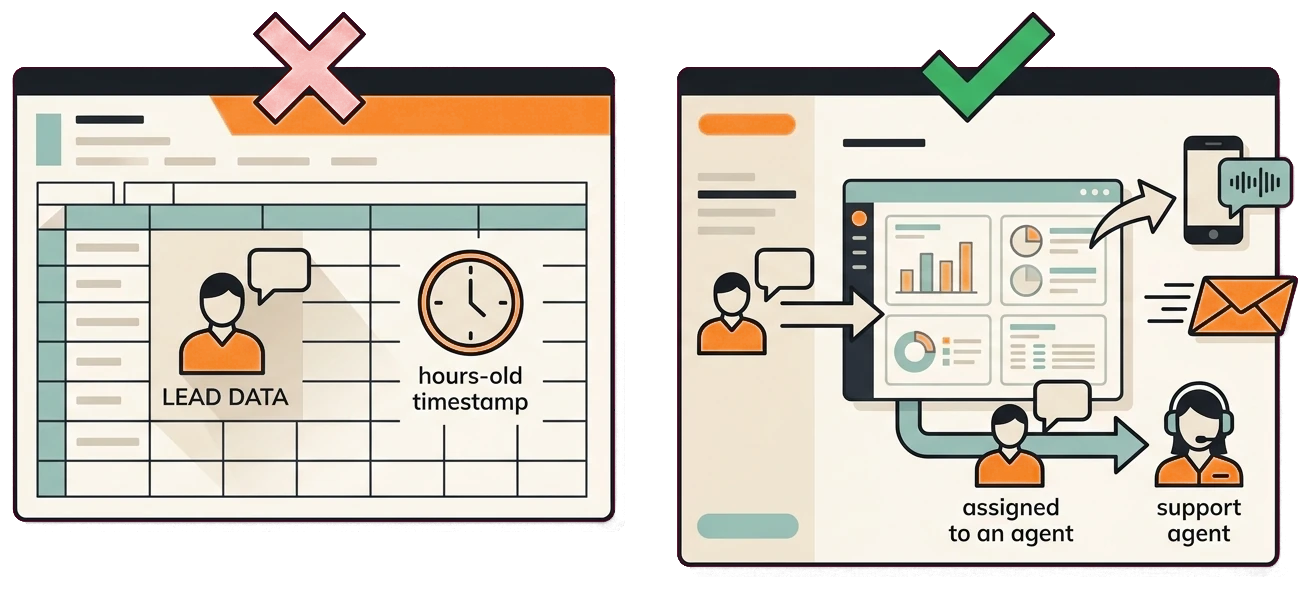
Lead-ad prospects expect a near-instant response, and this brokerage was answering in hours or days. By the time an agent called, the lead had gone cold or already bought from someone faster. Speed to lead was not one problem among many, it was the whole problem.
We traced a batch of leads from ad click to first call, and the gaps were obvious:
- Leads landed in a spreadsheet that someone checked only occasionally
- There was no instant routing to the right agent
- No automated first touch went out while the lead was still warm
- There was no CRM tying the pipeline together
- Hot leads turned cold in the hours-long gap before anyone reached out
The Solution
We connected Meta leads automation to the CRM, preserved source and consent context, triggered an immediate acknowledgement, and routed each eligible record to the appropriate agent. Median first response moved to under 60 seconds in the measured workflow.
- Meta leads captured straight into the CRM in real time
- Instant first touch within 60 seconds
- An immediate automated text and email to every prospect
- No more leads sitting in a spreadsheet
- Smart routing to the right agent
- Tasks and reminders so no lead gets forgotten
- Follow-up sequences that keep working the lead
- Reporting that ties ad spend to bound policies

A useful first response while intent is fresh
In insurance lead ads, the odds of connecting drop fast with every passing minute. A prospect who filled a form is comparing quotes right now, so answering in hours means answering after they have already talked to someone else. We closed that window to under a minute.
- Instant first touch: the moment a lead comes in, an automated text and email go out, so the prospect hears from the brokerage before they cool off.
- Under 60 seconds: first contact now happens automatically within a minute, instead of the hours or days it used to take.
- Every lead, every time: automation does not get busy or forget, so there are no leads left sitting unworked over a weekend.
- More conversations: contact rate rose 80% during the reporting period. Response speed was one contributing change alongside targeting, form quality, routing, consent language, and agent follow-up.
Route it to the right agent, then follow up
Speed only pays off if the lead reaches the right person and gets worked. We put a Meta ads lead pipeline into a real CRM that assigns owners, sets reminders, and keeps following up until an agent connects.
- Right agent, right lead: routing assigns eligible records by line of business or territory, with exception and reassignment rules for records the automation cannot place.
- Tasks and reminders: the CRM creates a follow-up task and reminder for the owner, so no lead slips because someone got busy.
- Follow-up sequences: automated sequences keep touching the lead across text and email until there is a real conversation.
- Spend tied to results: reporting connects each lead back to the ad that produced it, so the same budget produces more bound policies.

How We Did It
01. Lead capture integration
We connected Meta Lead Ads directly to the CRM so every lead arrives in real time.
02. Instant auto-responder
We built the automation that fires an immediate text and email the second a lead comes in.
03. Agent routing rules
We set the routing logic that sends each lead to the right agent with a task and reminder.
04. Follow-up sequences
We built SMS and email sequences that keep working the lead until contact is made.
05. Reporting
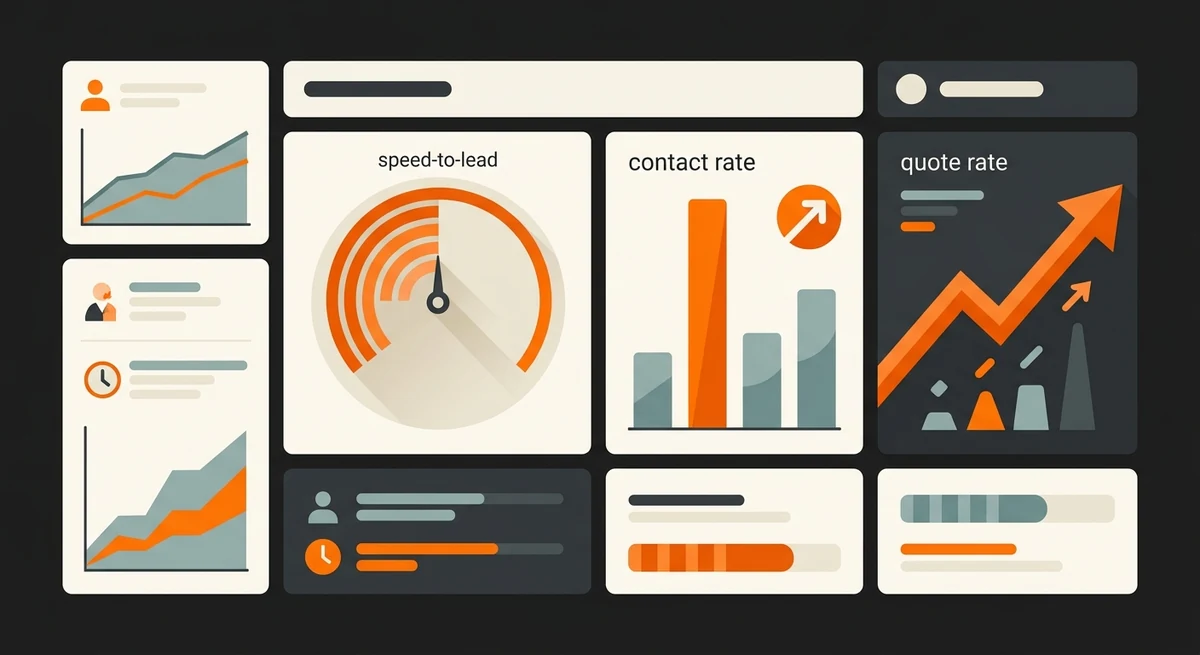
We wired reporting so speed to lead, contact rate, and quote rate are tracked back to ad spend.
The Results
Speed to lead dropped from hours to under a minute, and contact and quote rates rose sharply as a result. Because prospects heard back while they were still shopping, the same ad spend produced far more bound policies with no increase in budget.
| Speed to lead | hours to under 60 seconds |
| Contact rate | +80% |
| Quote rate | up significantly |
| Build time | 2 to 3 Weeks |
Services & tools used: Meta Lead Ads, CRM setup, automation platform, and SMS and email automation.
meta leads automationFast routing mattered more than a fast generic reply
The workflow improved contact when it sent a consent-aware, relevant first response and routed each request to the appropriate licensed team member.
- Preserve the ad and form consent record in the CRM.
- Deduplicate leads before multiple agents contact the same person.
- Judge the workflow on reached prospects, qualified quotes, and bound business.

Frequently Asked Questions
Leads going cold before you call?
We will show you how to respond to every Meta lead in seconds and route it to the right agent automatically. Turn the leads you already pay for into more bound policies.
Book a free consultationNo obligation. A 15-minute call and a clear action plan.
Services in this project: Meta Leads Automation · Meta Ads