

 (647) 478-5858
 (728) 500-4818
Law Firm · Backlink Audit + Disavow (Recovery)
Investigate a Search Decline Before Acting
A cautious backlink review within a broader recovery
A law firm saw rankings and organic traffic decline without an immediately obvious cause. We reviewed technical, content, manual-action, and backlink evidence; a cautious disavow was one documented intervention, and rankings later recovered toward prior levels over several months.
Results at a glance:
- Toxic domains disavowed
- Rankings recovered toward prior levels
- Organic traffic rebound
- Recovery over 3 to 6 months

The Challenge
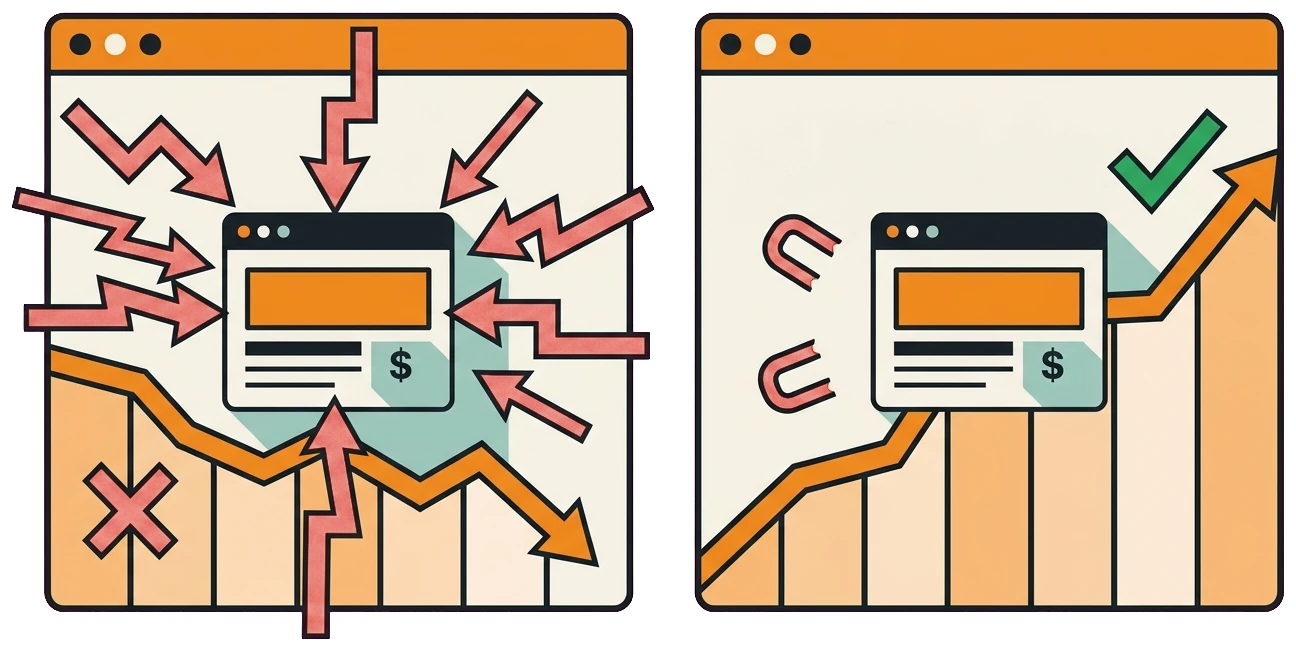
Rankings and organic traffic dropped, and nothing on the site explained it. There was no botched redesign, no content cut, no technical break that lined up with the timing. The firm worried it had been hit with a penalty and had no idea where to start looking.
The backlink review identified a suspicious increase worth investigating, but it did not prove who created the links or isolate them as the cause:
- No matching on-site release was found in the initial review
- A spike of low-quality referring domains showed up in the profile
- Many of the new links looked spammy and unrelated to law
- The available records did not identify who created the links
- Technical, content, demand, competitor, and algorithm changes remained competing explanations
- The firm feared a manual or algorithmic penalty
The Solution
We reviewed backlink exports and manual-action status against Google’s documented threshold for disavowal. The final file was narrow, manually checked, and preserved with its evidence; content and authority work continued as separate parts of the SEO recovery.
- Available backlink exports combined and reviewed
- Questionable domains triaged, then manually reviewed
- Google-format disavow file built and submitted
- Link spike documented without assigning ownership
- Quality citations built to rebuild trust
- Fresh content published to earn clean links
- Rankings and traffic monitored through recovery
- Ongoing link monitoring to catch new spam early
Separate tool flags from evidence
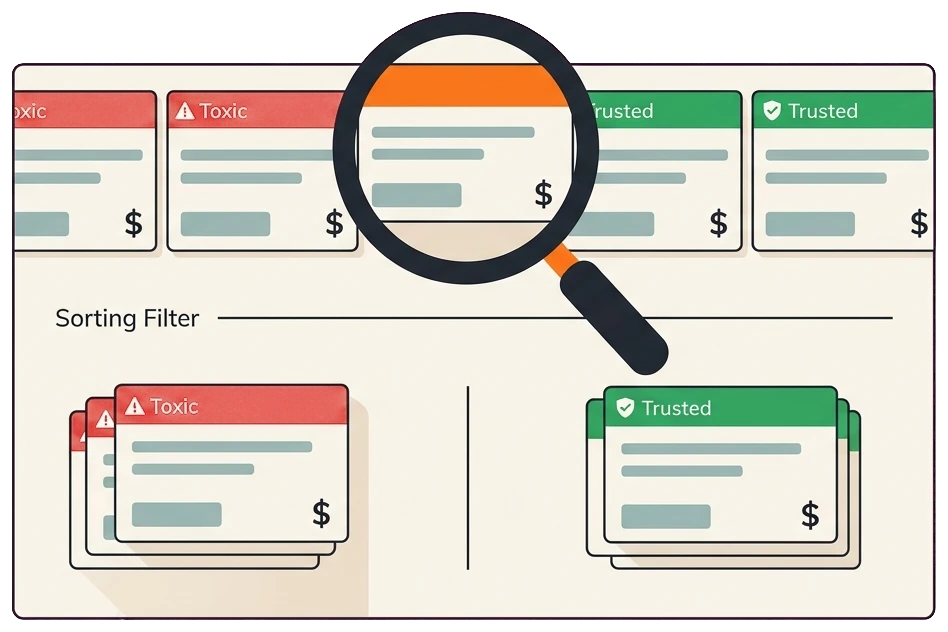
Third-party toxicity scores are useful for triage, but they do not represent Google’s judgment. We used them to organize the review, then checked context, acquisition history, manual-action risk, and legitimate links before including any domain.
- Profile review: we combined available backlink exports to broaden coverage, recognizing that no third-party index captures every link Google may know about.
- Documented triage: rules produced a review queue, while the final decision required human assessment against Google’s guidance.
- Observed timing: a cluster of low-quality domains appeared near the decline, an association that justified review but did not prove an attack or causal effect.
- Protected the good links: we were careful to keep legitimate links intact, since disavowing the wrong domains would only do more damage.
Use the disavow tool narrowly and monitor the wider recovery
Google says most sites do not need the disavow tool and warns that misuse can harm performance. After the documented review, the approved domains were submitted while technical, content, and authority work continued as separate recovery tracks.
- Google-format disavow: the manually approved file followed Google’s format and was preserved with the prior version because a new upload replaces the existing list.
- Patience by design: disavows are not instant, so we set expectations that recovery would play out over months as Google recrawled and reassessed the profile.
- Independent authority work: relevant citations, useful content, and legitimate link earning continued without claiming they replaced a measurable quantity of lost trust.
- Ongoing monitoring: we kept watching the link profile so a fresh wave of spam would be caught and dealt with before it could do damage again.

How We Did It
01. Backlink audit
Combined available backlink exports and used Semrush backlink research to review referring domains at scale.
02. Toxic classification
Used rule-based triage to organize questionable domains, followed by manual review against Google’s documented criteria.
03. Disavow build
Built a Google-format disavow file and submitted it through the Search Console disavow tool.
04. Rebuild authority
Earned clean citations and links, and published content to grow trustworthy authority again.
05. Monitor recovery
Tracked rankings and traffic through recovery and watched for any new spam links.
The Results
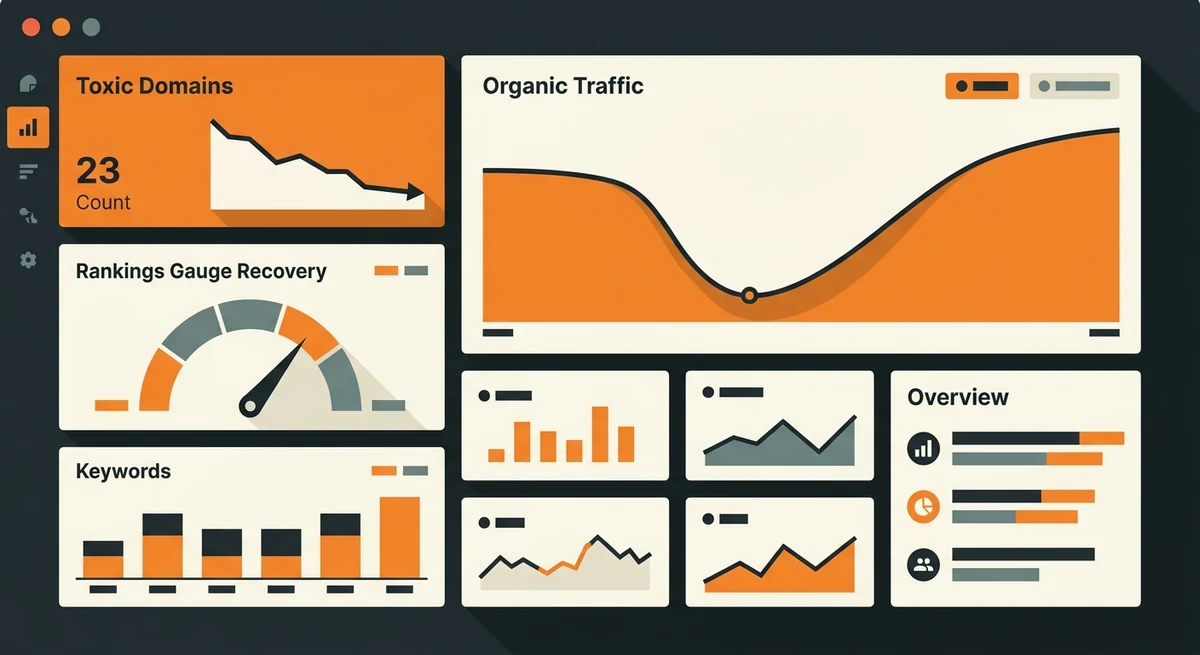
Rankings stabilized and later moved toward prior levels over the following months. The recovery occurred after several interventions and additional crawls, so the available evidence does not isolate the disavow, content, authority work, or algorithm changes as the sole cause.
| Toxic domains | Disavowed |
| Rankings | Recovered toward prior levels |
| Organic traffic | Rebound |
| Build time | 3 to 6 Months for Recovery |
Services & tools used: Semrush backlink research, disavow audit, Google Search Console disavow tool, and content and citation building.
seo recoveryThe responsible conclusion was narrower than the original suspicion
The link patterns were one investigated factor in a broader search decline. The records did not prove who created the links or isolate the disavow as the sole cause of later recovery.
- Rule out technical, content, manual-action, and demand changes first.
- Use Google's disavow tool only when its documented threshold is met.
- Preserve exports and decision notes so the file can be reviewed or reversed.

Frequently Asked Questions
How we evaluated backlink cleanup and recovery
Link evidence and search trends reviewed
We assessed backlink exports, domain and link patterns, toxic classifications, the submitted disavow file, and ranking and organic-traffic movement over the following months. On-site issues were reviewed as competing explanations before the link profile became the focus.
What cannot be concluded from the recovery
The suspicious links may have contributed to the decline, but the available evidence cannot prove who created them or establish a competitor attack as fact. Recovery can also reflect later crawls, content, authority work, and algorithm changes, so the disavow should not be treated as an isolated experiment.
Editorial review: Gilmedia strategy team. First published August 14, 2026.
Primary references
Related Gilmedia services
Rankings dropped with no reason?
We will review the decline, manual-action status, technical changes, content, and backlink evidence before recommending a recovery plan. The goal is a defensible next step, not a dramatic diagnosis.
Get your free auditNo obligation. A 15-minute call and a clear action plan.
Services in this project: SEO · AI Search Optimization