

 (647) 478-5858
 (728) 500-4818
Physiotherapy · AEO (Answer Engine Optimization)
Becoming the Answer AI Gives About Back Pain and Recovery
Getting cited by AI when patients ask about injuries and recovery
A physiotherapy clinic with several experienced therapists ranked decently in Google but was never mentioned when patients asked ChatGPT, Perplexity, or Google AI Overviews about injuries and recovery. We rewrote its content to be quotable, and AI engines started naming the clinic as the source.
Results at a glance:
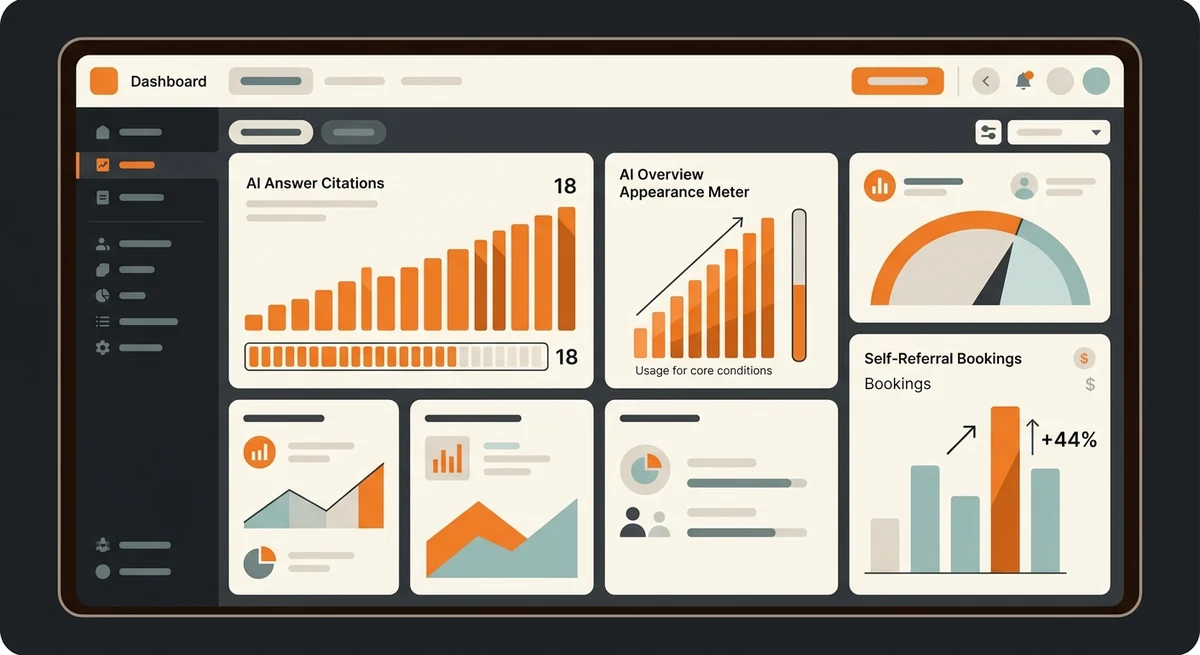
- AI answer citations gained for 18 target questions
- AI Overview appearances for core conditions
- Self-referral bookings up 44%
- Live in 2 to 4 months
The Challenge
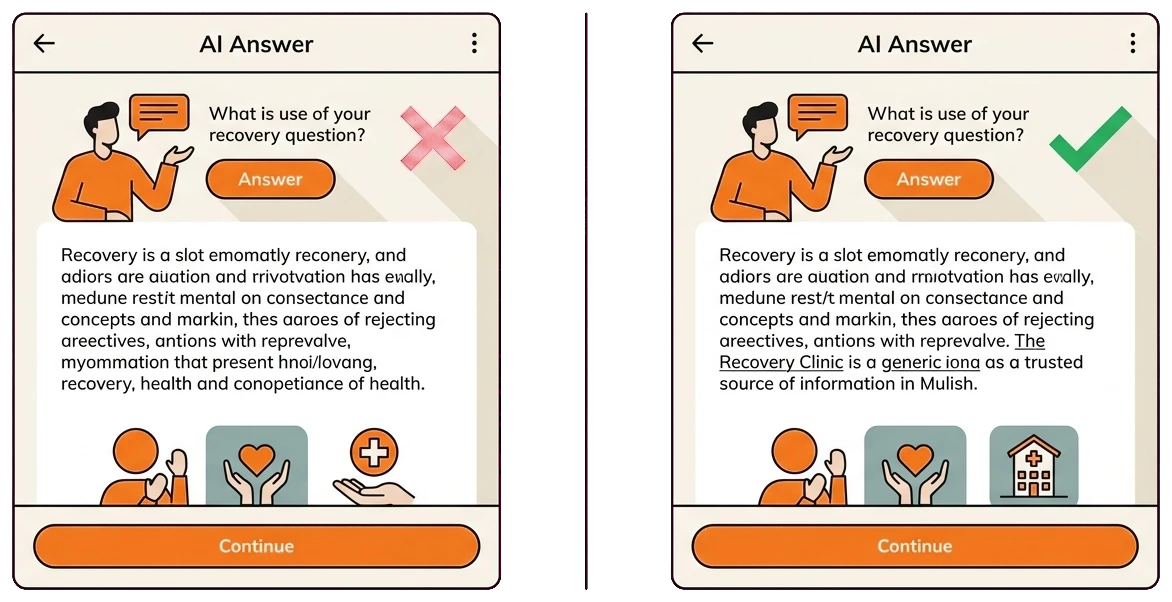
More and more prospective patients were asking AI assistants things like how long does a sprained ankle take to heal and do I need a referral for physio. The clinic never came up in those answers, so it lost the first-touch relationship to directories and national health sites. The expertise was there, but the AI engines had nothing to grab.
An AEO audit showed exactly why the clinic was invisible to answer engines:
- Pages read like brochures, not answers
- No concise answer blocks anywhere on the key pages
- No FAQPage or MedicalClinic schema
- No condition-specific explainers patients were actually searching
- Name, address, and services were inconsistent across the web
The Solution
We rewrote the key condition pages to open with a direct, quotable answer, then added supporting detail underneath. We layered in schema, tightened entity consistency, and published explainers written the way AI engines like to cite, the core of any AI search program. Here is what went into it.
- Answer-first rewrites of key condition pages
- Recovery-timeline and what-to-expect explainers
- FAQPage and MedicalClinic schema on every page
- Questions mined from real patient searches
- Consistent name, address, and services everywhere
- Content written the way AI engines like to quote
- AI-visibility monitoring across the major engines
- A clear entity AI could trust and cite
Lead with the answer, then explain
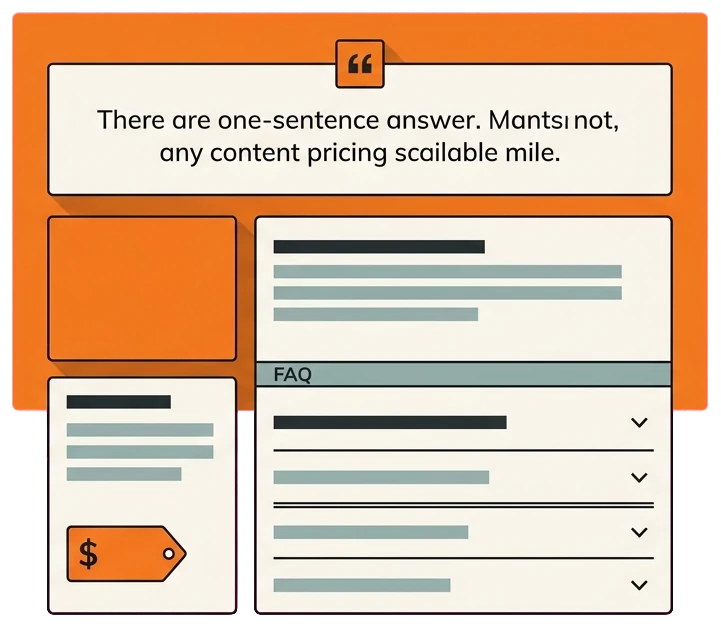
AI engines quote the sentence that answers the question, not three paragraphs of brochure copy. We flipped every key page to open with a direct, quotable answer, then backed it up with the detail patients need.
- A quotable opener: each condition page now starts with a clear, one-sentence answer to the question a patient is actually asking.
- Supporting depth underneath: below the answer we added the timelines, red flags, and next steps, so the page satisfies both AI engines and real readers.
- Real patient questions: we mined the exact things people ask AI assistants, like recovery timelines and referral questions, and built content around them.
- FAQ blocks that get quoted: concise question-and-answer sections give engines tidy, self-contained answers they can lift straight into a response.
Give AI a clear entity it can trust
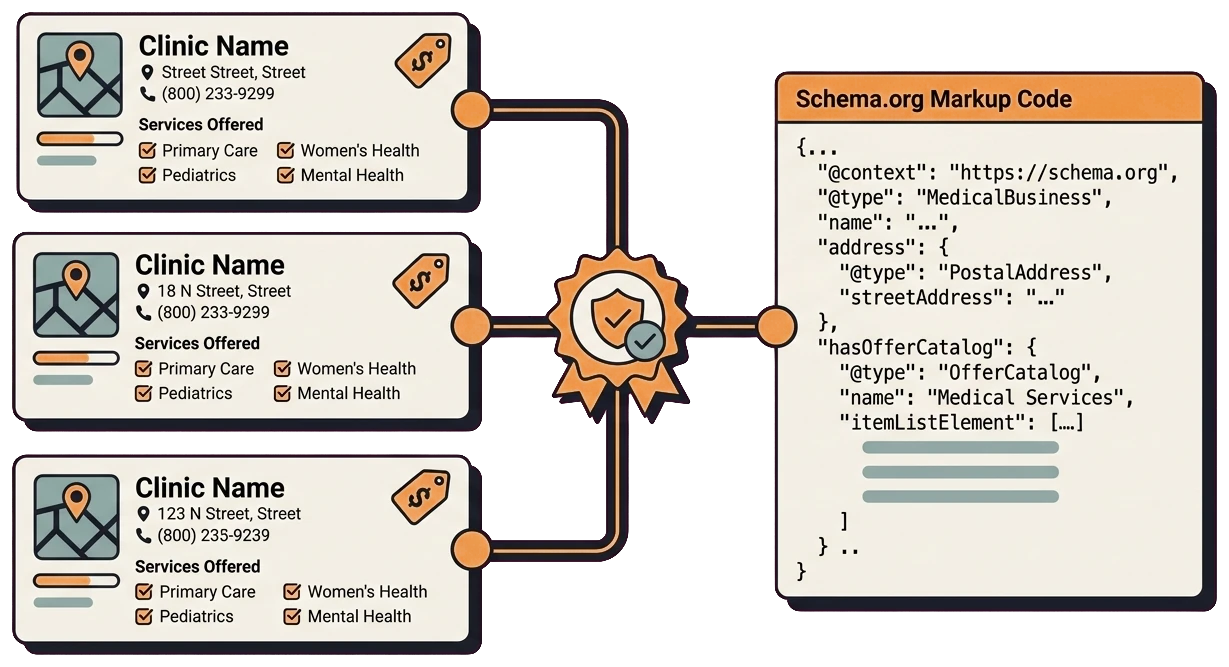
Answer engines only cite sources they can identify and trust. When a clinic’s details clash across the web, AI has no clear entity to name, so we made the clinic unmistakable with schema and clean technical foundations.
- MedicalClinic schema: structured data tells engines exactly what the clinic is, where it is, and what it treats, in a format they read directly.
- FAQPage schema: marking up the answer blocks makes them even easier for engines to pull and attribute to the clinic.
- Consistent details everywhere: we aligned the name, address, and services across directories, so nothing contradicted the clinic’s own site.
- A trusted source: with a consistent, well-described entity, AI engines had the confidence to cite the clinic by name in their answers.
- Citations that convert: patients started arriving because an AI assistant pointed them to the clinic, which pushed self-referrals up 44%.
How We Did It
01. AEO audit
We ran an AEO audit and mined the real questions patients ask AI about injuries and recovery.
02. Answer-first rewrite
We rewrote key condition pages to open with a direct, quotable answer followed by supporting detail.
03. Schema injection
We added FAQPage and MedicalClinic schema so engines could read and attribute the content.
04. Entity cleanup
We aligned the clinic’s name, address, and services across directories for a consistent, trusted entity.
05. Publish and monitor
We published recovery-timeline explainers and tracked AI visibility across the major answer engines.
The Results
Within a few months the clinic started showing up as a cited source in AI answers and Google AI Overviews for target conditions. New patients began mentioning that an AI assistant had pointed them to the clinic, and self-referrals climbed off the back of it.
| AI answer citations | 18 target questions |
| AI Overview appearances | Core conditions |
| Self-referral bookings | +44% |
| Build time | 2 to 4 Months |
Services & tools used: AEO audit, FAQPage and MedicalClinic schema, answer-first content, entity consistency cleanup, Google Search Console, and Semrush.
ai search“Patients walk in telling us the AI recommended us by name. You cannot buy that kind of trust.“
Clinic Director, Physiotherapy clinic

Frequently Asked Questions
Invisible when patients ask AI?
We will show you exactly why AI engines skip your clinic and how to become the source they cite. Be the name AI recommends for recovery.
Get your free auditNo obligation. A 15-minute call and a clear action plan.
Services in this project: AI Search Optimization · SEO