

 (647) 478-5858
 (728) 500-4818
Tree Removal · SEO
Found on Google, Not Just by Word of Mouth
From invisible to page one for a tree removal company
A tree removal company relied entirely on referrals, with almost no organic presence and revenue that swung with the seasons. We built a proper SEO program, grew organic traffic 180%, and turned Google into a steady source of new work.
Results at a glance:
- Organic traffic up 180%
- Page-one rankings for core local terms
- Organic leads now a steady channel
- Meaningful rankings in 3 to 6 months


The Challenge
When referrals dried up, the phone went quiet. The company did not rank for the services or the areas that mattered, so there was no steady stream of inbound work to fall back on. Revenue rose and fell with word of mouth and the season, with nothing evening it out.
We ran an SEO audit and found the site was effectively invisible for high-intent local searches:
- Content was thin, with nothing targeting real search demand
- There were no dedicated service pages for removal, trimming, or stump grinding
- There were no location pages for the areas the company served
- The technical foundation made important pages harder to crawl and index efficiently
- The Google Business Profile was unoptimized, hurting local visibility
The Solution
We built a proper SEO program from the ground up: dedicated service pages for removal, trimming, stump grinding, and emergency work, location pages for each service area, technical cleanup, schema, and a content plan targeting the questions homeowners actually search.
- Service pages for removal, trimming, stump grinding, and emergency work
- Service and location page architecture
- Technical cleanup so important pages can be crawled and indexed
- A content plan built around real homeowner questions
- Local visibility and Google Business Profile
- Schema markup so search engines understand each page
- Keyword and competitor research guiding every page
- Ongoing content and link building to compound results
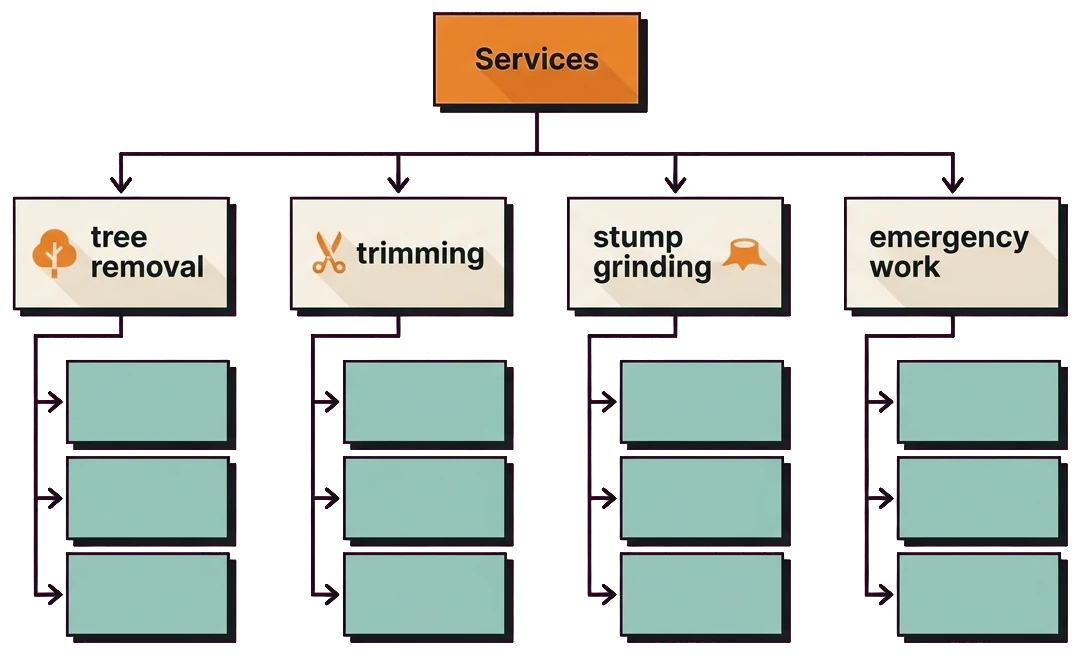
A page for every service and every area
A single thin page cannot rank for a dozen different searches across several towns. We mapped each service the company offers and each area it covers to its own dedicated page, so both homeowners and Google could find exactly the right one.
- One page per service: removal, trimming, stump grinding, and emergency work each got a dedicated page with content built for what that searcher wants.
- Location pages: each service area got its own page, so a homeowner searching in that town lands on something genuinely relevant to them.
- Mapped to avoid overlap: each page targets one search intent, so the site stops competing against itself for the same keyword.
- Built on real demand: keyword and competitor research decided which pages to build, so the effort went where people actually search.
Win the local searches that drive calls
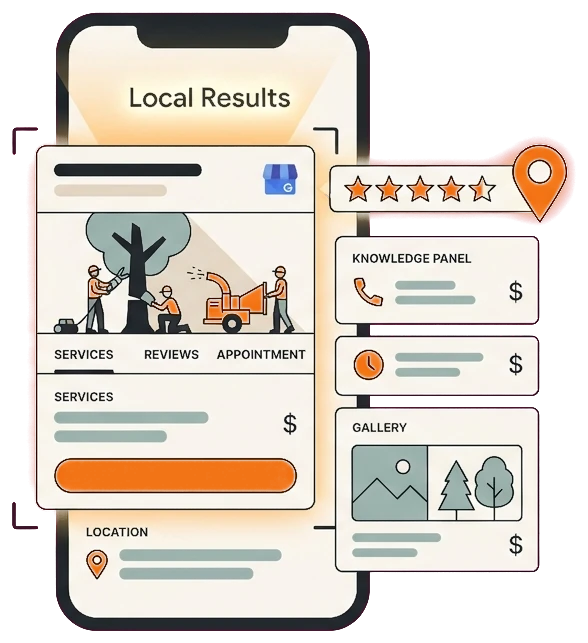
For a local trade, many high-intent journeys start in local search. We paired useful service content with technical fixes, valid structured data, and Google Business Profile work, then measured site and profile outcomes separately.
- Google Business Profile: we optimized the profile so the company started surfacing for core local terms at the moment of need.
- Technical foundation: we cleaned up issues that limited efficient crawling, canonicalization, internal discovery, and indexation.
- Structured data: valid markup provided explicit context that matched visible service and business information; it was not treated as a ranking guarantee.
- Content and links: an ongoing content plan and link building kept authority compounding after the core pages went live.
How We Did It
01. Keyword and competitor research
We used Semrush to map the searches and competitors that mattered in each service area.
02. Site architecture
We planned dedicated service and location pages so each search intent had its own page.
03. Content build
We built out the service, location, and question-focused content on WordPress.
04. Technical SEO and schema
We fixed crawl and indexation barriers and added structured data that matched the visible business and service information.
05. GBP and ongoing content
We optimized the Google Business Profile and kept publishing content and building links to compound rankings.
The Results
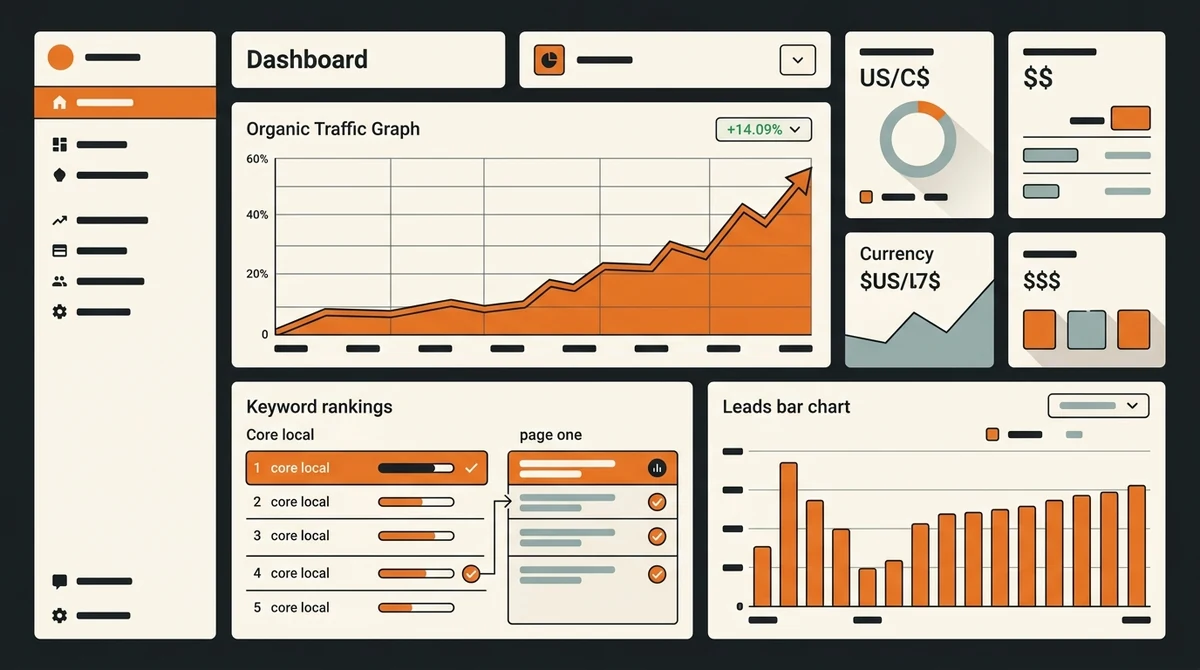
Organic visibility and traffic grew steadily, with page-one rankings for the core local terms that drive calls. Just as important, inbound leads became consistent instead of seasonal and referral-dependent, so the company stopped waiting for the phone to ring.
| Organic traffic | +180% |
| Core local terms | page-one rankings |
| Organic leads | now a steady channel |
| Build time | 3 to 6 Months for Rankings |
Services & tools used: SEO audit, Semrush, WordPress, schema markup, Google Business Profile, and content pipeline.
seoLocal growth came from service evidence, not city-name repetition
The useful pages matched distinct services and local demand while the profile, site, and business details described one consistent operator.
- Keep emergency and planned-work search intent separate.
- Use original job evidence where the company genuinely serves an area.
- Read rankings with proximity, seasonality, and lead quality in view.

Frequently Asked Questions
How we measured organic growth and local visibility
Search performance reviewed
The assessment uses organic traffic, rankings for the service-and-location terms targeted by the new site structure, and the resulting organic lead pattern. We reviewed the campaign as a progression from almost no search presence to page-one visibility for commercially relevant local searches.
Why the 180% growth is client-specific
Organic growth depends on the starting baseline, market competition, service-area demand, seasonality, content quality, links, Google Business Profile strength, and algorithm changes. The 180% increase documents this campaign's measured period and should not be treated as a guaranteed SEO return.
Editorial review: Gilmedia strategy team. First published July 28, 2026.
Primary references
Related Gilmedia services
Invisible on Google when it matters?
We will show you exactly why your site does not rank and what it takes to reach page one for the searches that drive calls. Turn Google into a steady source of work.
Get your free auditNo obligation. A 15-minute call and a clear action plan.
Services in this project: SEO · AI Search Optimization