

 (647) 478-5858
 (728) 500-4818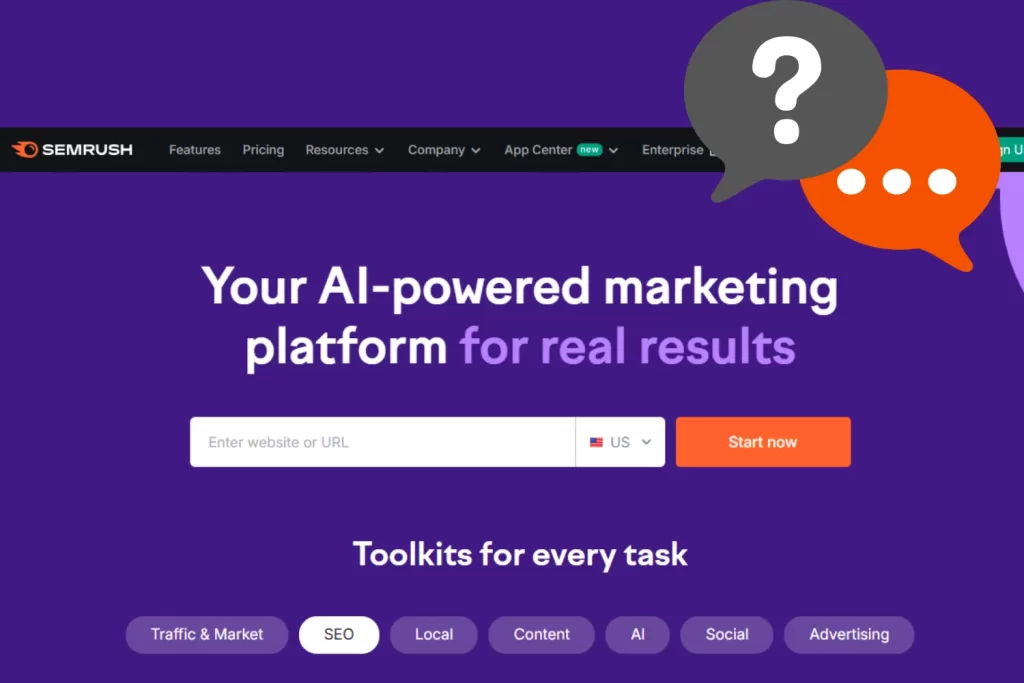
Updated August 19, 2026. Semrush can be valuable when a team has recurring SEO research, competitive analysis, site auditing, rank tracking, reporting, or AI visibility work. It is unnecessary when the team will open it once, export a large list, and return to decisions that should have been made with first-party data.
The honest answer is conditional: buy Semrush when it replaces manual work and improves decisions often enough to justify the subscription, training, and data limitations.
What Semrush is now
Semrush has moved beyond a single SEO interface into separate toolkits for SEO, AI visibility, content, local marketing, competitive traffic, advertising, and other use cases. Features and limits vary by toolkit and plan, so confirm the current package instead of relying on an old feature review.
The official SEO Toolkit documentation covers keyword research, competitive research, backlink tools, position tracking, on-page analysis, and site auditing. The AI Visibility Toolkit covers sampled brand mentions, citations, prompts, competitors, and technical access for AI crawlers.
Semrush is usually a good fit when
- You manage several sites, locations, products, or competitors every month.
- You need repeatable keyword, backlink, content-gap, and technical audit workflows.
- You track rankings by device and location and understand that rank data is sampled.
- You need scheduled client or stakeholder reporting from a consistent workspace.
- You have a named owner who will turn findings into changes and verify the result.
- You want a directional view of brand mentions and citations across selected AI platforms.
You may not need it when
- You run one small site and have no recurring research or reporting process.
- Your immediate problem is weak tracking, poor sales follow-up, or a low-converting offer.
- You have not connected Search Console, analytics, advertising, and CRM data.
- No one has time or authority to implement technical and content recommendations.
- You expect a tool score, keyword volume, or AI visibility score to be exact ground truth.
- The required toolkit, seats, projects, locations, exports, or limits exceed the value of the decisions it supports.
Match the use case to the right data source
How does our site perform in Google Search?
Start with: Google Search Console. Semrush adds: Competitor estimates, keyword expansion, rank tracking, audits, and gap analysis.
Which channels produce customers?
Start with: Analytics, CRM, call tracking, and finance. Semrush adds: Research and reporting context, not closed-revenue truth.
What technical issues should we fix?
Start with: A crawler, Search Console, logs, and manual testing. Semrush adds: Repeatable site audits, prioritization, and trend monitoring.
Where do competitors appear?
Start with: Search results and customer research. Semrush adds: Estimated keywords, links, pages, ads, and market patterns at scale.
Are AI systems mentioning our brand?
Start with: A controlled prompt set and referral data. Semrush adds: Directional mention, citation, competitor, and prompt monitoring across supported systems.
Understand the limits before trusting the dashboard
Third-party keyword volumes, traffic estimates, backlink indexes, difficulty scores, and competitive positions are models built from sampled data. They are useful for comparison and prioritization, but they will not match a competitor’s private analytics.
AI visibility data has similar limits. Prompt sets, locations, model versions, personalization, retrieval, and response variability affect what appears. Semrush describes its AI metrics as a database of prompts and responses used for benchmarking. Treat the result as directional research, not a complete count of every customer interaction.
Calculate the real subscription cost
Check the current Semrush plans and limits for the toolkits, projects, tracked keywords, users, locations, exports, historical data, API access, and reporting features you need. Include staff time for setup, training, analysis, reporting, and implementation.
A simple value test is:
Annual value of time saved and better decisions – annual subscription and operating time = net value.
Use a conservative estimate. A tool does not create value because it identifies 2,000 issues. It creates value when the team fixes the right issues and measures an improvement.
Run a 30-day proof before committing
- Choose three recurring decisions the platform must improve.
- Connect only the sites and data needed for those decisions.
- Set up one technical audit, one competitive research workflow, and one tracking or reporting workflow.
- Record hours saved, actions taken, false positives, and insights unavailable from current tools.
- Compare the result with Search Console, analytics, CRM, and manual checks.
- Subscribe only to the plan and toolkit that passed the test.
Our verdict
Semrush is a capable research and workflow platform, especially for agencies, multi-location businesses, and teams managing SEO and AI visibility across many topics. It is not a replacement for strategy, first-party measurement, technical judgment, customer research, or implementation.
Gilmedia uses marketing tools as inputs to decisions, not as the final report card. Explore our SEO services and resources, or contact us if your team needs a practical research, implementation, and measurement workflow.