

 (647) 478-5858
 (728) 500-4818

The Meta Ads auction before Black Friday feels crowded because thousands of advertisers enter competing ads into the auction simultaneously to reach the same high-intent shoppers. For e-commerce brands, performance metrics can fluctuate overnight without any setting changes. Understanding how the underlying auction mechanics work helps protect your ad performance during peak shopping events.
Black Friday falls on November 27, 2026, meaning competition ramps up weeks in advance. This guide explains why the Meta Ads auction before Black Friday environment gets so competitive and how advertisers can effectively navigate the surge.
Quick Take
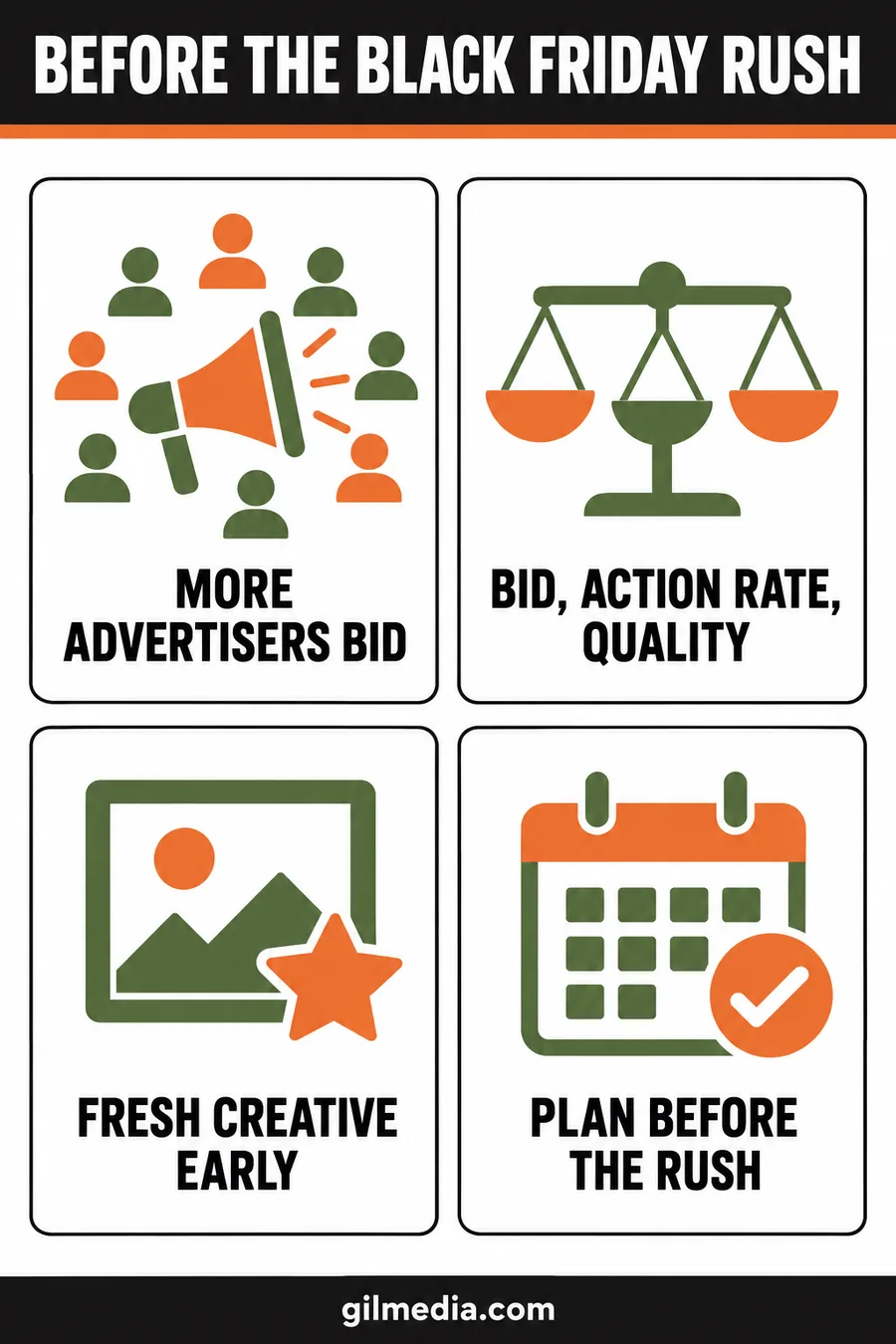
Meta awards ad placements based on Total Value: bid amount, estimated action rates, and ad quality. Increased advertiser density naturally intensifies competition for every impression. While you cannot control auction volume, optimizing core quality signals helps maintain competitive positioning.
How the Meta Ads Auction Picks a Winner
Every time an ad impression becomes available, Meta executes an automated auction. According to Meta’s documentation on ad auction mechanics, the winning ad is chosen based on the highest Total Value, subject to a minimum price floor. Total Value is calculated using three primary factors:
| Factor | Definition |
|---|---|
| Bid | The amount an advertiser is willing to pay to achieve a specified result. |
| Estimated Action Rates | The probability that a given user will engage with or convert from the ad. |
| Ad Quality | A measurement derived from user feedback and evaluation of low-quality attributes. |
Because estimated action rates and ad quality carry significant weight in the formula, highly relevant creative can win auctions over higher cash bids. For brands seeking specialized execution, structured Meta ad campaign management ensures these quality scores stay competitive alongside bid parameters when navigating a Meta Ads auction Black Friday campaign.
Why the Meta Ads Auction Black Friday Environment Gets Crowded
When multiple brands launch promotional campaigns simultaneously, target audiences heavily overlap. More active ads competing for identical user sessions directly increases auction density. This influx explains why participating in the Meta Ads auction during Q4 sales leads to rapid shifts in CPMs and cost per click.
Ad inventory costs vary by account and audience segment. Tracking historical performance and comparing your cost per result from early Q4 against peak promotional weeks provides the clearest baseline for your specific account.

What Your Bid Strategy Does When the Market Tightens
Meta offers three main bidding frameworks, each performing differently under heightened competition:
- Spend-based bidding (Highest Volume/Value): Focuses on exhausting the allocated budget. Costs per acquisition may fluctuate significantly as competitive pressure grows.
- Goal-based bidding (Cost/ROAS Targets): Attempts to maintain efficiency targets. If market costs exceed thresholds, ad delivery may scale down to preserve performance limits.
- Bid Cap: Sets an absolute ceiling per auction bid. While controlling costs, overly restrictive caps risk dropping out of winning auctions entirely.
Selecting the appropriate bidding model prior to high-volume events prevents unexpected pacing issues or lost impression delivery during peak traffic windows.
Save Your Budget
Calculate target acquisition costs based on product margins well ahead of Q4. Establishing realistic efficiency targets prevents mid-campaign delivery throttling or unprofitability.
Budget and Learning: Why Big Changes Backfire
Significant updates during high-competition periods destabilize campaign performance. Meta ad sets re-enter the learning phase after major structural edits, typically requiring approximately 50 optimization events within a 7-day window to restabilize delivery.
Drastic budget increases can also raise acquisition costs temporarily. As daily budgets expand rapidly, algorithms broaden reach beyond high-intent buyers into secondary, higher-cost segments to fulfill spend requirements.
Pro Tip
Finalize audience structures, pixel tracking, and primary ad sets at least 7–10 days prior to sale launches to ensure campaigns exit the learning phase before peak shopping traffic arrives.
A Calmer Plan for the Weeks Before the Rush
Preparing for the Meta Ads auction Black Friday rush requires structured execution to maintain stability:
- Launch promotional creative early to complete the learning phase prior to peak traffic dates.
- Refresh ad creative to maintain high quality scores and strong estimated action rates.
- Verify conversion tracking, pixel events, and server-side API setups with test orders.
- Document bidding strategies and efficiency limits before increasing daily budgets.
- Maintain a daily log of performance metrics to separate platform trends from campaign adjustments.
- Ensure web hosting infrastructure can handle sudden spikes in inbound traffic. For WooCommerce users, refer to our guide on preparing WooCommerce for Black Friday traffic surges.
Download the Free Quick Guide
A practical one-page checklist to help structure campaign bidding and budget strategy ahead of Q4.

What Meta Doesn’t Promise
Platform automated rules and higher budget allocations do not guarantee lower acquisition costs or fixed profit margins. Performance fluctuates based on vertical competition, offer resonance, creative quality, and shifting consumer intent during peak sales holidays.
Good to Know
This guide provides general strategic context. Platform features and performance dynamics evolve over time. Always verify current bidding options within Meta Ads Manager prior to making structural account adjustments.
Conclusion: The Crowd Is Predictable, So Plan for It
High advertiser competition in the Meta Ads auction before Black Friday landscape is an annual constant. Long-term performance relies on establishing clear bid parameters, maintaining creative quality, allowing sufficient learning time, and monitoring account metrics systematically throughout the holiday season.
Frequently Asked Questions
Is the Meta Ads auction before Black Friday more expensive?
Costs vary based on audience targeting and overall industry competition. Due to higher advertiser participation during peak holiday shopping, average CPMs typically rise across most e-commerce verticals compared to earlier Q3 baselines.
Should I raise my budget for Black Friday?
Budget adjustments should align with target margins and inventory capacity. Raising budgets gradually in the days leading up to the sale allows algorithms to scale delivery without disrupting ad set stability.
Is it too late to start Meta Ads for Black Friday?
New ad sets require initial delivery phases to optimize performance. Starting late is still possible, but keeping campaign structures simple and creative clear helps accelerate initial learning.
Which bid strategy is best when the auction is crowded?
The best bid strategy depends on campaign goals. Spend-based bidding prioritizes full budget allocation, cost caps control efficiency thresholds, and bid caps set firm limits per impression auction.
Want a second pair of eyes before the rush?
Preparing paid media campaigns ahead of peak shopping periods ensures budget efficiency and reliable performance. Learn how we support brands with paid advertising management in Toronto or contact our team directly to review your setup.